
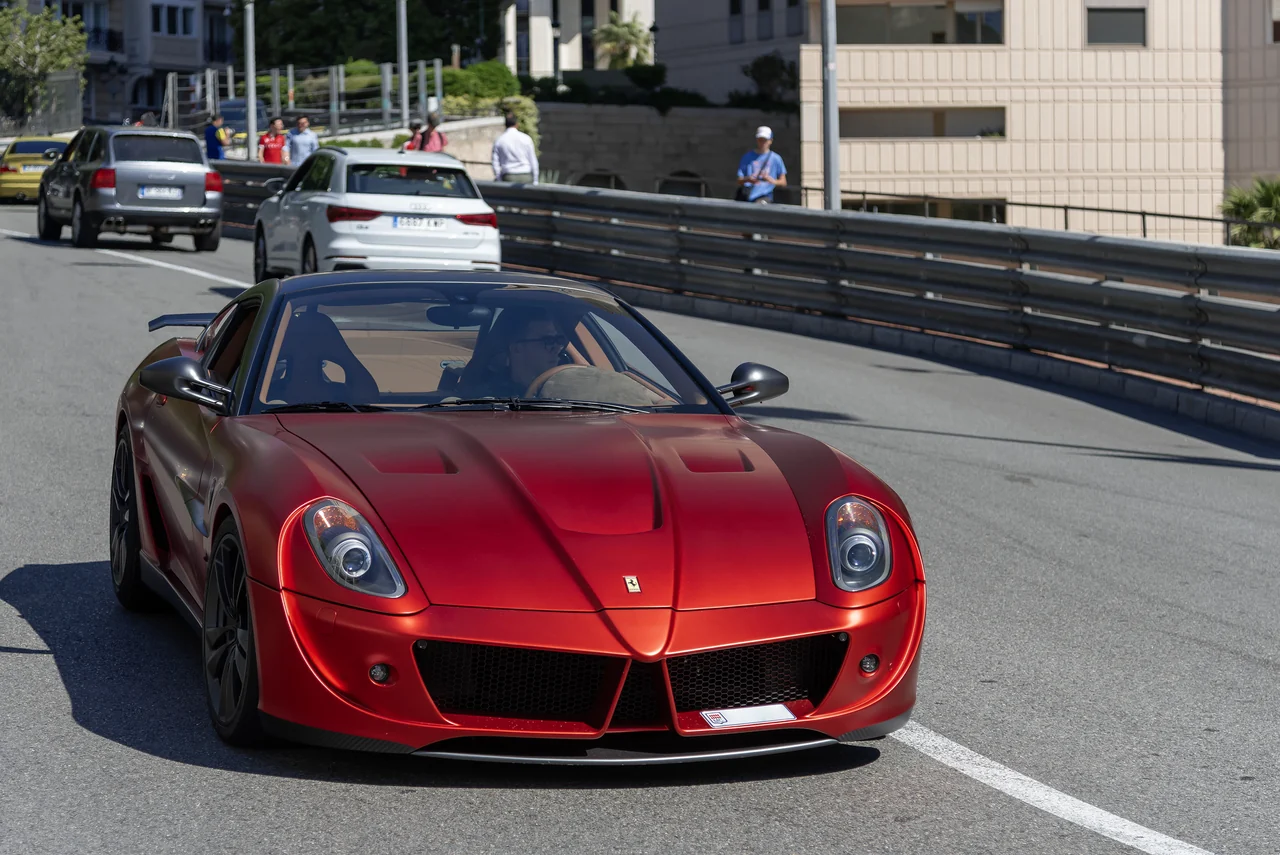

The Mansory story
Founded by Kourosh Mansory in 1989, Mansory developed a business around extensive personalisation of luxury and performance cars. Its work encompasses visible carbon-fibre bodywork, wheels, interiors and performance changes, often combined in a complete visual transformation. The range has expanded across supercar, grand-touring and luxury-SUV donors rather than following one manufacturer’s model hierarchy.
Ferrari Stallone and Siracusa projects illustrate the history particularly clearly: the finished car takes a recognisable Ferrari foundation and gives it a separate specialist appearance. Later programmes use the same broad approach on hybrid supercars and luxury vehicles. The continuity is a willingness to make the conversion conspicuous, even when that challenges the visual restraint of the original design.
Current lineup & programmes
Mansory’s range is a conversion catalogue. Donor families and related editions are grouped below; individual colours, one-off commissions and accessory part numbers are not separate model lines. A currently listed conversion can be for a donor car whose factory production has ended.
Aston Martin DB11 Cyrus / DBX
Published donor catalogue; includes older donor generations
Audi RS6 / RS7 / RSQ8
Published donor catalogue; includes older donor generations
Bentley Continental GT / GTC / Bentayga / Flying Spur / Mulsanne
Published donor catalogue; includes older donor generations
BMW M5 / XM / 7 Series / X7
Published donor catalogue; includes older donor generations
Bugatti Veyron Vincerò / Vivere; Chiron; Mistral
Published donor catalogue; includes older donor generations
Cadillac Escalade
Published donor catalogue; includes older donor generations
Ferrari 12Cilindri / Spider: Equestre; Purosangue: Pugnator; 296 GTB / GTS; SF90 / Spider: F9XXX; Roma / Spider; F8 / Spider: F8XX; 812 / GTS; Portofino / M; Monza SP1 / SP2
Published donor catalogue; includes older donor generations
Ford GT: Le Mansory / Under Armour edition
Published donor catalogue; includes older donor generations
Ineos Grenadier
Published donor catalogue; includes older donor generations
Koenigsegg Jesko
Published donor catalogue; includes older donor generations
Lamborghini Revuelto: Initiate; Urus / S / SE: Venatus; Huracán; Aventador S / SV / SVJ: Carbonado / Cabrera
Published donor catalogue; includes older donor generations
Land Rover Defender 90 / 110; Range Rover / SV; Sport / SVR / SV
Published donor catalogue; includes older donor generations
Maserati MC20 / MC20 Cielo
Published donor catalogue; includes older donor generations
Mercedes-Benz E / G / GLE / GLS / AMG GT / S / SL / V-Class programmes
Published donor catalogue; includes older donor generations
Porsche 911 / 992.2 Turbo S; Panamera / Macan / Cayenne / Taycan / 918
Published donor catalogue; includes older donor generations
Rolls-Royce Cullinan / II: Emperor; Ghost / Phantom / Spectre
Published donor catalogue; includes older donor generations
Smart Fortwo wide-body / soft-kit programmes
Published donor catalogue; includes older donor generations
Tesla Cybertruck: Elongation / Elongation Evo
Published donor catalogue; includes older donor generations
Zeekr 9X
Published donor catalogue; includes older donor generations
Past models
Past performance-car families relevant to our 1996–2026 archive. A surviving product page or conversion catalogue does not mean the original donor car remains in production.
Ferrari 599 Stallone / F12 Stallone
Past donor families
Ferrari 458 Siracusa / 488 / GTC4Lusso
Past donor families
Earlier Huracán Torofeo and other archived programmes
Past conversion catalogue
Aston Martin Vantage V8 / DB9 / Volante / Vanquish / S / Cyrus
Past conversion families
McLaren 720S / MP4-12C
Earlier donor programmes
Lotus Evora GTE / Evora S / Elise S
Past conversion families
Earlier Bentley, Mercedes-Benz, Porsche, Rolls-Royce and other donor generations
Full historical catalogue
The SuperCarNews view
Mansory’s work invites a design argument, and that is a perfectly useful subject for a motoring publication. A highly resolved factory supercar may lose some of its visual clarity when extra surfaces and contrasting materials are added. On another car, a bolder treatment may create exactly the sense of occasion its owner wants. The distinction depends on the specific conversion, not an automatic approval or dismissal of the badge.
Our preference is for a complete composition. Wheels, ride height, colour, interior and bodywork should look as though they were considered together. A conspicuous component can be beautifully made and still sit awkwardly in the overall design. Craftsmanship and taste are related subjects, but they are not the same judgement.
Performance changes need a separate assessment. Visible carbon does not establish a measured weight saving for the whole car, and a claimed engine output does not explain thermal management or the effect on the driveline. Those details deserve the same scrutiny they would receive in a factory-car announcement.
For the archive, identifying the donor is essential. A photograph of a 599-based Stallone is a record of that particular earlier project; it should not be presented as the current 812 or 12Cilindri conversion. The family labels and photograph captions above preserve those differences while letting the reader follow the company’s changing approach.
Sources & further reading
- Mansory company and founding history
- Mansory model directory
- Mansory Ferrari catalogue
- Mansory Lamborghini catalogue
- Mansory latest programmes
- Mansory past models
- Mansory Aston Martin catalogue
- Mansory Audi catalogue
- Mansory Bentley catalogue
- Mansory Bmw catalogue
- Mansory Bugatti catalogue
- Mansory Cadillac catalogue
- Mansory Ford catalogue
- Mansory Ineos catalogue
- Mansory Koenigsegg catalogue
- Mansory Land Rover catalogue
- Mansory Maserati catalogue
- Mansory Mercedes Benz catalogue
- Mansory Porsche catalogue
- Mansory Rolls Royce catalogue
- Mansory Smart catalogue
- Mansory Tesla catalogue
- Mansory Zeekr catalogue
- Mansory Mclaren archive
- Mansory Lotus archive