
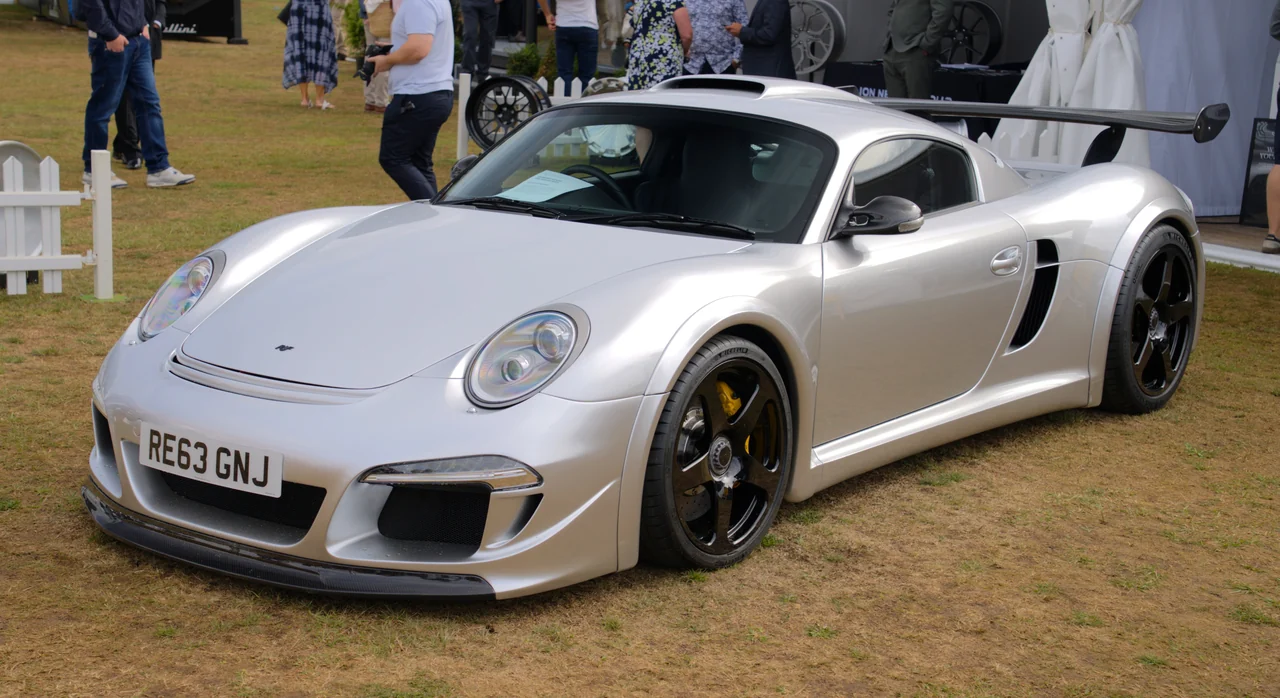

The RUF story
RUF traces its roots to 1939, but its modern cars are best understood through the distinction between Porsche-based work and independently engineered vehicles. CTR Anniversary and SCR use familiar visual references around RUF’s own carbon structure; CTR3 develops a very different mid-engined silhouette. Rodeo, Tribute and EHRA extend the present published programme beyond those established names.
The company occupies a distinctive place in this directory. Calling every RUF a tuned Porsche obscures the structural work behind its own models. At the same time, older conversions and derivative programmes still need their donor and build history explained. The interesting story is how inherited visual language and independent engineering coexist, not an argument about badges alone.
Current lineup & programmes
Performance and specialist model families are listed below. Programme status describes the manufacturer’s published range or announcement, rather than stock or an available allocation. Open-top and special derivatives are grouped where they share a family; follow the model link for the distinctions.
Past models
Past performance-car families relevant to our 1996–2026 archive. A surviving product page or conversion catalogue does not mean the original donor car remains in production.
CTR / Yellowbird; CTR2
Heritage programme
CTR3 / CTR3 Clubsport
Earlier CTR3 derivatives
The SuperCarNews view
RUF's published specialist range includes CTR Anniversary, SCR, CTR3 Evo, Rodeo, the Tribute study and EHRA. These programmes differ in architecture and development stage, so the model name alone does not establish production or delivery status. The first two use a silhouette that invites an immediate Porsche association, while the CTR3 line takes a visibly different mid-engined direction. The manufacturer's own carbon-structure work is essential context; these programmes should not all be dismissed as ordinary production Porsches with a tuning package.
The familiar silhouette creates a demanding design problem. A reader needs to understand which parts of the identity are inherited references and which belong to the new engineering. We find the contrast between recognisable appearance and independent structure especially compelling because it rewards looking beneath the surface.
The CTR3 Evo offers a different way to achieve distinction. Its proportions announce a specialist architecture more openly. Neither approach is automatically more authentic. The valuable comparison is how successfully each car's appearance, controls and mechanical layout serve the intended experience.