
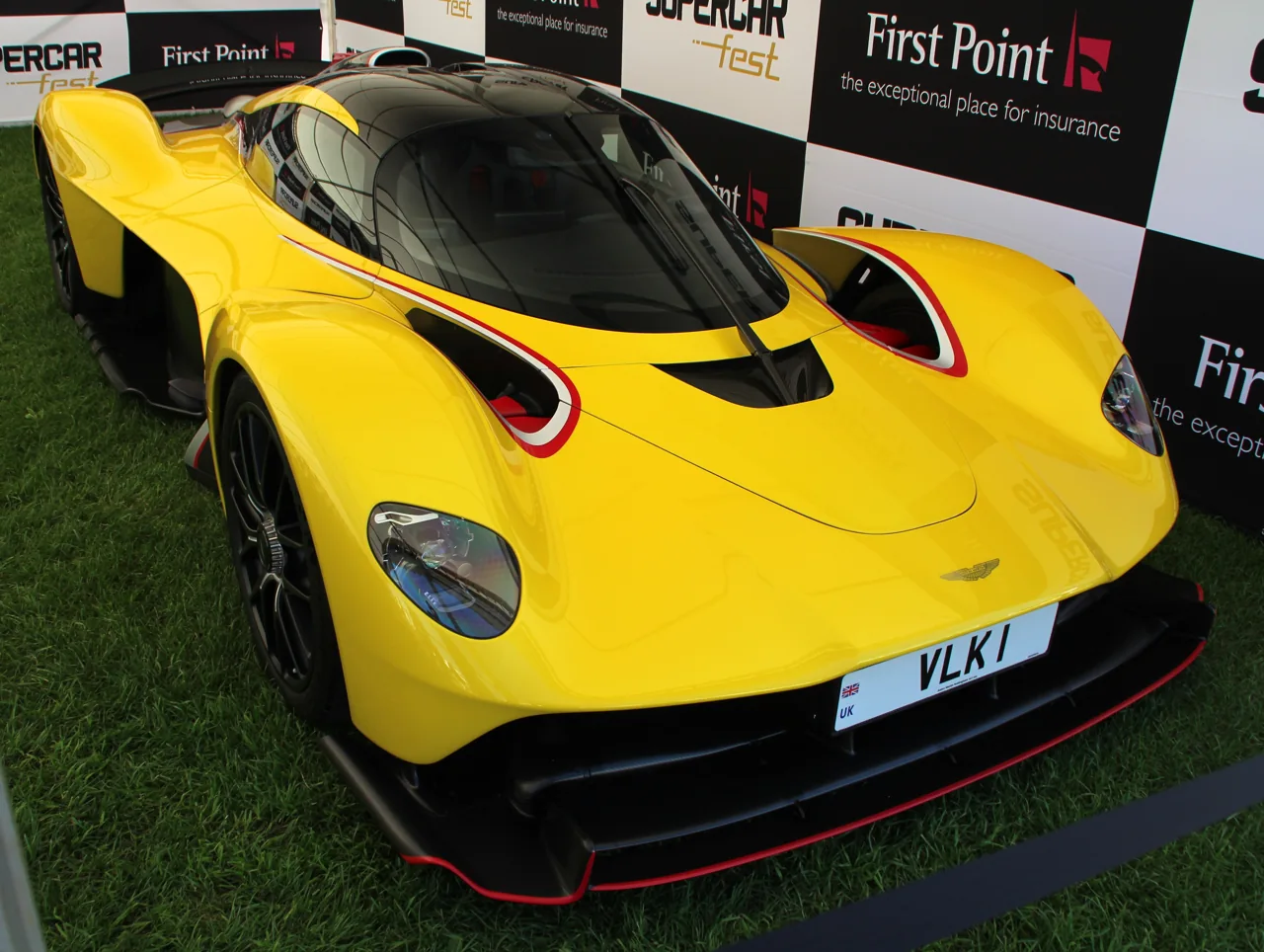

The Aston Martin story
Lionel Martin and Robert Bamford began the business in London in 1913. The early competition ambition became part of a much longer history of sports cars and grand tourers. That inheritance helps explain the modern company’s breadth: racing references and elegant road-car proportions have coexisted for far longer than the current mid-engined programmes.
Aston Martin’s recent history brings together long-bonnet grand tourers, compact sports cars and increasingly specialised mid-engined programmes. DB7, DB9 and DB11 explain the route to DB12; successive Vanquish generations carry a separate flagship identity. Vantage has ranged from an approachable sports-car proposition to limited V12 and circuit-oriented derivatives. One-77, Vulcan and Valkyrie show how far the company can depart from its familiar GT proportions.
That breadth is worth preserving. A car designed to cross a country and one organised around aerodynamic performance do not need the same compromises. We are most interested when the distinction is clear in the seating, luggage provision, controls and body shape, rather than expressed only through the price or the number of cylinders.
Current lineup & programmes
Performance and specialist model families are listed below. Programme status describes the manufacturer’s published range or announcement, rather than stock or an available allocation. Open-top and special derivatives are grouped where they share a family; follow the model link for the distinctions.
Vantage / Vantage S / Roadster
Current sports-car range
DB12 / DB12 S / Volante
Current GT range
Vanquish / Volante / Vanquish 25
Current GT programme
Valhalla
Current mid-engined programme
Valkyrie / Spider
Limited road-car programme
Valkyrie AMR Pro / Valkyrie LM
Track-only programmes
DBX707 / DBX S
Current SUV range
Past models
Past performance-car families relevant to our 1996–2026 archive. A surviving product page or conversion catalogue does not mean the original donor car remains in production.
DB7 / V12 Vantage / GT / DB9 / DB11
Archive · 1990s
V8 Vantage V550 / V600 / Le Mans
Archive · 1990s
DBS / Volante / Superleggera / 770 Ultimate
Archive · 2000s
One-77
Archive · 2000s
V12 Vanquish / Vanquish S
Archive · 2000s
V8 Vantage / V12 Vantage / S / GT8 / GT12
Archive · 2000s
Vanquish II / S / Volante / Zagato
Archive · 2010s
Vulcan / AMR Pro
Track-only archive · 2010s
The SuperCarNews view
The V8 Vantage models of the 1990s, including the V550, V600 and Le Mans references, belong to a different world from the later compact Vantage family. The shared name can hide that difference. A useful archive should make the generation clear before discussing the car’s role or specification.
We think these cars are important context because they represent a particularly forceful version of the traditional Aston Martin idea: substantial proportions, a powerful engine and a strong sense of occasion. They should not be criticised simply for failing to resemble a later mid-engined hypercar. Their purpose was different, and the visual presence of that purpose remains part of their appeal.
The V12 Speedster, DBR22 and Zagato-related commissions broaden the special-project story. They deserve to be identified by programme and format rather than treated as ordinary variants of whichever production model looks most similar. A bespoke body can create a distinct design subject without necessarily introducing a wholly new mechanical family.
Our view is that the best coverage asks what the commission is trying to express. Open-air exposure, historical proportion or a different material treatment can be meaningful ambitions. Rarity alone is a less useful subject. Readers should be given enough context to judge the result as a car and a design, even when ownership is entirely outside their circumstances.
Sources & further reading
- Company origins and heritage
- Aston Martin DBX S and DBX707 range
- Aston Martin Vanquish: three generations
- Aston Martin Vanquish 25 announcement
- Aston Martin 2026 performance range at Goodwood
- Aston Martin One-77 history
- Aston Martin Valhalla technical overview
- Aston Martin Valkyrie hybrid powertrain
- Aston Martin Valkyrie AMR Pro final programme description
- Aston Martin Valiant and the Q special-series context
- Aston Martin 2018 registration document: Vulcan and GT models
- Aston Martin DBS 770 Ultimate
- Aston Martin Valkyrie LM customer track programme