

The Pagani story
Pagani’s modern history is organised around Zonda, Huayra and Utopia, but the branches between those names are unusually important. Zonda developed from the original C12 into increasingly specialised road cars and separate track machines. Huayra introduced a different visual and aerodynamic language, then expanded through roadsters, BC derivatives and coachbuilt projects. Utopia brings a new main family without making every continuing Huayra programme obsolete.
Material presentation is central to this identity. Carbon structures, visible metalwork and elaborate cabin details make the engineering part of the aesthetic experience. We think that is a stronger foundation for distinction than rarity alone. The question is whether each detail contributes to a coherent car, rather than how many individual surfaces can attract attention.
Current lineup & programmes
Performance and specialist model families are listed below. Programme status describes the manufacturer’s published range or announcement, rather than stock or an available allocation. Open-top and special derivatives are grouped where they share a family; follow the model link for the distinctions.
Huayra Codalunga / Codalunga Speedster
Current programme · 2020s
Huayra R / R Evo Roadster
Track-only programme · 2020s
Imola / Imola Roadster / Huayra Tricolore
Bespoke programme · 2020s
Utopia / Utopia Roadster
Current programme · 2020s
Past models
Past performance-car families relevant to our 1996–2026 archive. A surviving product page or conversion catalogue does not mean the original donor car remains in production.
Zonda C12 / S / Roadster
Archive · 1990s
Zonda F / Roadster F / Cinque / Tricolore / HP Barchetta
Archive · 2000s
Zonda R / Revolución
Track-only archive · 2000s
Huayra / Roadster / BC / Roadster BC
Archive · 2010s
The SuperCarNews view
The early cars are worth discussing independently of their later, more elaborate relatives. A first expression often has a clarity that becomes harder to see as a programme accumulates variants. That does not make it automatically preferable, but it gives the C12 and S a legitimate appeal beyond being the starting point of a famous family tree.
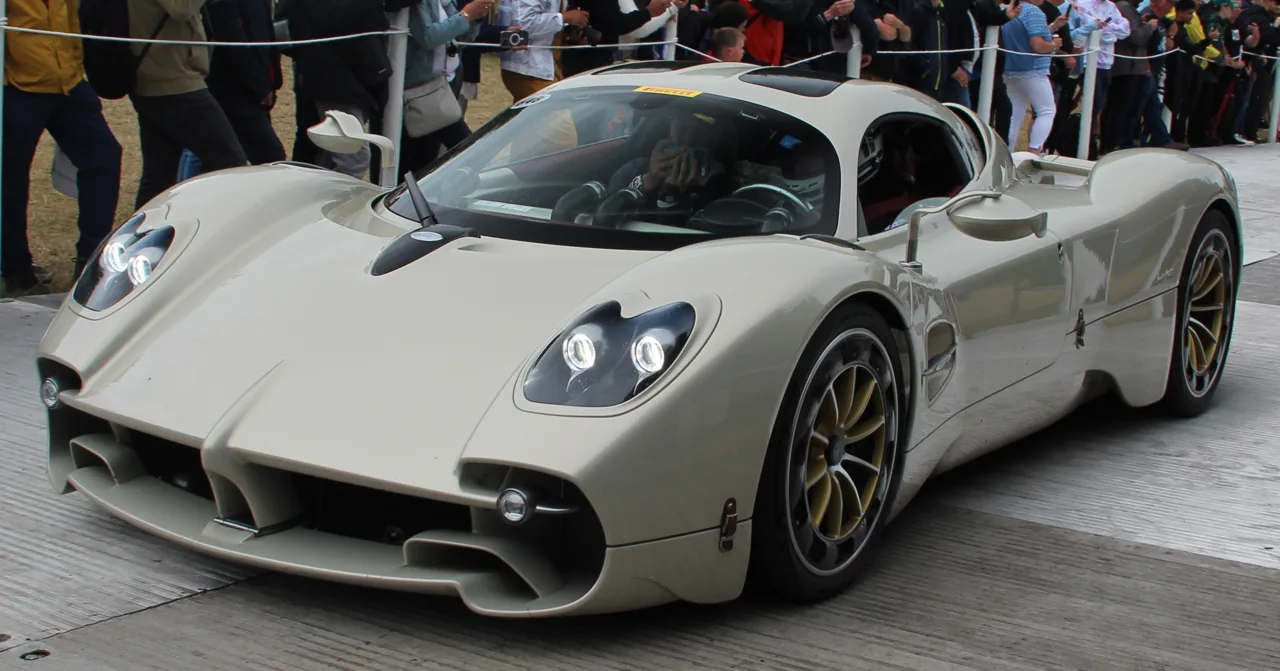
Utopia is Pagani’s third core family, following Zonda and Huayra. The manufacturer describes a non-hybrid V12 programme and a deliberate emphasis on visible mechanical controls. Its published material quotes 864 hp for the coupé, while the Roadster announcement identifies a 130-car programme and a claimed 1,280 kg dry weight.
The Roadster and coupé were developed together, according to Pagani, rather than the open version being conceived only after the closed car. That is a useful factual detail because it explains the intended relationship between the two designs. The dry-weight claim is a manufacturer measurement condition and should not be compared directly with a rival’s ready-to-drive kerb weight.
We think Utopia’s strongest idea is that modern engineering can be used to preserve a particular kind of physical interaction. A manual gearbox capable of handling a contemporary hypercar’s demands is not an absence of development. It is a development effort directed towards a different goal. That makes the car a useful counterpoint to the highly automated hybrid flagships elsewhere in the catalogue.
Our reservation concerns the difference between an attractive philosophy and a successful interaction. Beautiful controls still need to be clear and comfortable to use. Elaborate visible mechanisms should reward the driver as well as the photographer. The published concept is compelling, but the quality of the actual experience cannot be concluded from that concept alone.