
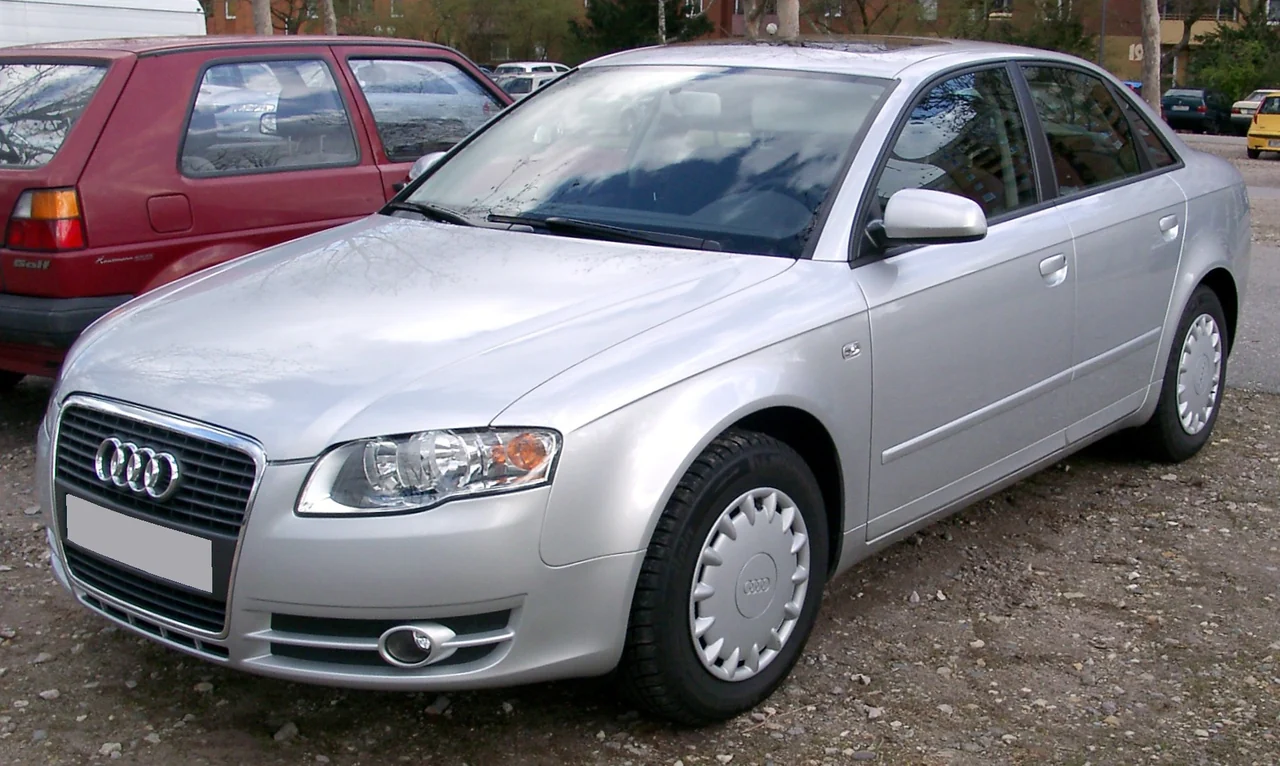
Compare two cars, not two reputations
An A4 can make an appealing understated performance daily, particularly when the body and drivetrain match the owner's needs. The B7 and B8 belong to different development stages, so their equipment and architecture deserve separate treatment. Neither generation can be reduced to a single reliability verdict that applies to every engine, gearbox and previous owner.
The B8's revised longitudinal layout is a real engineering distinction, while a good B7 can still be attractive for someone who prefers its size, appearance or a particular specification. We would treat those preferences as the starting point, then let the individual inspection decide whether the chosen car deserves the money. A newer registration date does not repair a weak service history.
Be especially clear about the transmission. A seller's use of 'automatic' or 'quattro' leaves too much unresolved for a meaningful maintenance comparison. Ask the workshop to identify the fitted unit and explain the service evidence it expects to see. Do the same for the engine before accepting claims about a recent major service.
We would compare the total cost of reaching an equivalent, dependable starting condition: due maintenance, tyres, brakes, fluid leaks, electrical faults and any unresolved diagnostic work. Keep cosmetic preferences separate from those needs. The older car can legitimately be the better purchase when its condition is clearer and the newer alternative depends on optimistic assumptions.
Choosing between an Audi A4 B7 and B8 is not a vote on which generation is “reliable”. Engine, gearbox, driveline, body, history and present condition vary too much for that. The useful comparison begins with architecture, then returns to the evidence attached to each individual car.
“B8” is enthusiast shorthand. Audi service literature uses 8K-prefixed sales codes for the 2009 A4, while the VIN and exact type remain the anchors for parts and repairs.4 Apply the same discipline to either generation.
What changed with the B8
Audi explains that the B8 A4 placed the differential ahead of the clutch, moving the front axle farther forward. The manufacturer associates this layout with a 2,808 mm wheelbase and axle-load distribution.1 These are design facts, not proof that a used B8 will steer better or cost less to own than a particular B7.
The newer architecture also brings its own drivetrain and electronic configuration questions. Audi’s 2009 A4 service document distinguishes front-drive and quattro sales codes, along with multiple transmission and final-drive arrangements.4 “A4 automatic” remains too vague for servicing or diagnosis.
| Choice factor | B7 candidate | B8 candidate |
|---|---|---|
| Generation identity | Confirm exact type, VIN and market details | Confirm VIN plus 8K-prefixed type/sales data where applicable |
| Architecture | Earlier platform | Front axle moved forward under Audi’s newer longitudinal layout |
| Driveline | Identify front-drive/quattro and gearbox | Identify front-drive/quattro, gearbox and final-drive configuration |
| Technology | Judge fitted systems and condition | Expect a different electronic and mechanical configuration, then test it |
| Buying priority | History and condition | History and condition |
Quattro does not mean one system
Audi’s technical history describes evolving quattro technologies and distinguishes systems used with longitudinal engines from those on other architectures.2 Do not assume that every quattro badge denotes identical hardware, behaviour or service needs.
Record the engine code, gearbox code and production option codes. Ask an Audi/VW specialist to verify what driveline is fitted and which maintenance procedure applies. Front-wheel-drive and quattro cars require different inspection questions, but neither should receive a blanket verdict.
Build a car-specific evidence file
Before comparing two advertisements, reduce each car to facts.
- Full VIN, type, build date and Australian supply or import history
- Engine and gearbox codes
- Front-drive or exact quattro configuration
- Production option codes
- Itemised service and repair invoices
- Current diagnostic scan and mechanical inspection
- Recall completion by VIN
- PPSR certificate obtained immediately before purchase
A full-system scan should distinguish current, intermittent and readiness-related faults. It does not replace inspection of leaks, suspension, brakes, driveline, HVAC, electrics or prior crash repair.
| Evidence | Strong candidate | Weak candidate |
|---|---|---|
| Identity | All codes and records agree | Missing labels or unexplained mismatches |
| Maintenance | Engine- and gearbox-specific invoices | Generic stamps and “recently serviced” claims |
| Diagnostics | Results interpreted with a mechanical inspection | Seller clears warnings without diagnosis |
| Body | Repair history disclosed and structure assessed | Cosmetic finish conceals uncertain repair work |
| Driveline | Exact configuration and service evidence known | “Quattro is bulletproof” offered as the answer |
Inspection checklist
Arrange an independent Audi/VW specialist inspection. See the engine cold where possible and continue through a fully warm road test after basic safety checks.
- Verify VIN, engine code, gearbox code and PR codes.
- Confirm front-drive or quattro and the actual transmission.
- Check for oil or coolant leaks without assigning a cause from appearance alone.
- Observe start-up, idle, temperature and warning-lamp behaviour.
- Test transmission selection and shifts under normal legal driving.
- Assess steering, suspension, tyres and brakes.
- Operate climate control, infotainment, lighting and other fitted electrics.
- Inspect the underside and body for prior crash repair.
- Perform a full-system scan and reconcile faults with physical findings.
- Review evidence for engine- and gearbox-specific maintenance.
Do not describe a warning lamp as minor. Transmission, quattro, brake, fuel and restraint work requires the correct factory procedure and equipment.
Australian recalls and title checks
Australian recall REC-000060 covers specified 2011–2015 Audi A4, A5 and Q5 vehicles for an auxiliary-heater connector overheating and fire risk.3 It does not apply to every B8. Check the VIN through official channels and have recall remedies completed by an authorised repairer.
Run a PPSR search on the day of, or the day before, purchase. The result can show registered security interests and NEVDIS stolen or written-off data.56 Match the VIN and keep the certificate.
Australian model availability cannot be reconstructed safely from overseas data alone. Local brochures, manufacturer records and the VIN are needed before claiming a particular engine, trim or drivetrain was officially delivered here.
Which should you buy?
Choose the better-documented, better-inspected car that suits your intended use. If both pass, the B8’s newer architecture may be the feature you prefer. A well-kept B7 may still be the clearer ownership proposition if the competing B8 has vague gearbox history, unresolved warnings or uncertain repairs.
Parts research should remain at category level until the exact VIN, codes and PR data have been matched. Visual similarity is not fitment evidence.
A careful comparison may still end with the older car ahead. The result should come from the two inspection files, not a verdict attached to B7 or B8.


Sources and further reading
References supporting the reporting and practical context on this page.