
In this article
- Avoiding a single national stereotype
- Original NSX: usability is an engineering ambition
- Second-generation NSX: continuity through a different method
- Lexus LFA: the engine is only part of the achievement
- Nissan GT-R: capability without the conventional silhouette
- GT-R50: the coachbuilt interpretation
- R390 GT1: a different Nissan altogether
- GR GT and GR GT3: the next programme has its own identity
- LFA Concept: a name crossing propulsion types
- The SuperCarNews view
Avoiding a single national stereotype
The original NSX, Lexus LFA and Nissan GT-R are often placed together as Japanese answers to the European supercar. That is geographically convenient but mechanically unhelpful. One makes a case for a usable mid-engined sports car, another concentrates extraordinary resources on a specialist V10 flagship, and the third pursues performance through a more substantial coupé architecture and integrated electronic control.
Their differences are the subject of this feature. We include the unusual Nissan R390 road car and the newly announced Toyota and Lexus programmes to connect the archive with the present. We have not driven these vehicles; the opinions here concern documented engineering choices, visible design and the questions those choices raise.
Original NSX: usability is an engineering ambition
Honda introduced the original NSX in 1990 and ended that generation's production in 2005. It therefore overlaps a substantial part of our 1996–2026 archive despite beginning earlier. Its aluminium monocoque and mid-engined V6 layout formed the basis of a long-running family, sold under Honda or Acura branding depending on market.
The car's relatively clear, low-bodied shape gives an impression of unusual visual restraint for the category. We find that persuasive because a specialist sports car does not need to appear difficult to use in order to look special. Visibility, access and the relationship between the driver and controls are legitimate engineering objectives, not concessions that automatically weaken a supercar.
That does not let us declare the NSX effortless to drive from a photograph. It gives us a concrete brief to investigate. A full assessment would examine the sightlines from the actual seat, the control effort and the way the car communicates as conditions change. Honda's intentions are well documented; our own experience would still need to be established.
The range evolves through open-roof NSX-T, Type S and focused Type R or NSX-R branches, with the R GT representing an especially specialised historical footnote. These versions should not share one undifferentiated specification table. Roof structure, transmission, engine revision and market all matter when discussing an individual car.
The focused variants also make an interesting counterargument to the standard car's broader usability. Reducing equipment or increasing commitment can serve a clear purpose, but it changes the brief. Our preference is to explain that choice rather than assume a rare R badge makes every other NSX secondary.
Second-generation NSX: continuity through a different method
The second-generation NSX arrived in 2016 with a hybrid propulsion system and a very different technical architecture. Honda described the Type S as the final development of that programme, with the production run concluding in 2022. It belongs in the archive, not in a list implying fresh factory orders in 2026.
The interesting question is whether continuity has to mean mechanical repetition. If the original ambition was to make substantial performance accessible and controllable, electronic integration and electrification could be a modern way to pursue it. That is a more useful starting point than rejecting the second car simply because it uses a different method from the first.
Equally, complexity has to justify itself through the quality of the result. We would want to understand the consistency of response, the transition between operating modes and how much information reaches the driver. The presence of advanced systems alone does not prove that a car feels natural or involving.
The final Type S is important within that development story, but its specification should not be retrospectively applied to every earlier car. An archive should make the changes understandable and preserve the distinction between a programme's starting point and its culmination.
Lexus LFA: the engine is only part of the achievement
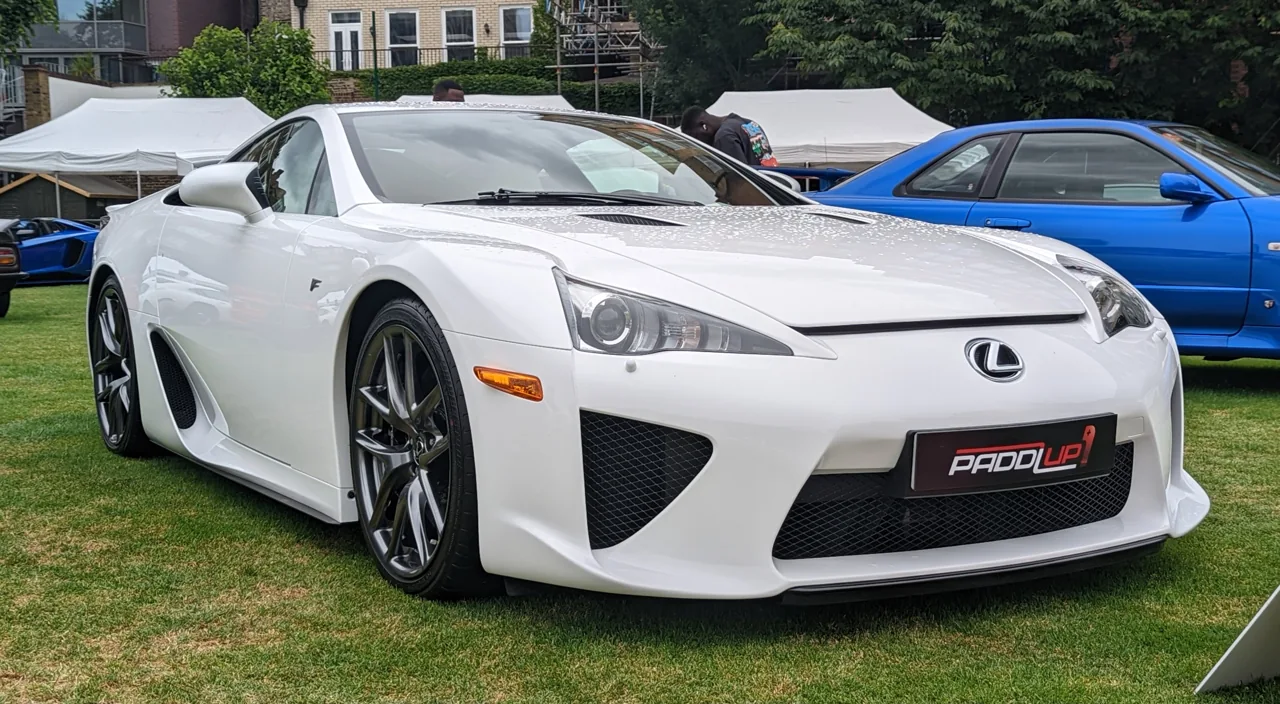
Lexus's original LFA announcement describes a 4.8-litre naturally aspirated V10, a rear-mounted automated sequential transmission and extensive carbon-fibre construction. The production programme was limited to 500 cars. The Nürburgring Package develops a more circuit-focused interpretation within that history.
The V10 understandably dominates attention, but the structural story deserves equal space. Lexus's development timeline records a move from an aluminium-based concept towards carbon-fibre construction. That is a consequential decision: a material change can alter manufacturing processes, joining methods and the programme's required expertise. It is not simply a decorative carbon finish added near the end.
We find the LFA most compelling when those choices are viewed together. A bespoke engine, unusual production commitment and a deliberately restrained overall shape make a more specific statement than a car assembled around a single headline statistic. Its triangular exhaust arrangement is memorable, yet the body does not depend on dozens of disconnected visual gestures.
Sound is an unavoidable part of the LFA's reputation. Recordings can help illustrate its character, but they do not reproduce what an occupant hears or feels under load. We can discuss the engineering intention and the importance of an acoustic identity without claiming to have experienced the car from the driver's seat.
The automated transmission also deserves historical context rather than an automatic dismissal through modern dual-clutch expectations. A proper comparison would assess its operation within the complete car and the period's available choices. Later technology does not make the earlier engineering decision unworthy of explanation.
Nissan GT-R: capability without the conventional silhouette
The R35 GT-R entered production in 2007 and reached its final production milestone in August 2025, according to Nissan's retrospective. SpecV, Track Edition, Nismo and T-spec versions form part of a long development history. Earlier Skyline GT-Rs explain the name's background, but the R35 is the central production family in this feature.
Its substantial coupé body challenges the visual expectation of a supercar. We think that is useful. A category should be able to accommodate an engineering argument that does not begin with a low mid-engined silhouette. At the same time, the GT-R's performance-car ancestry should remain visible rather than be rewritten to fit a fashionable label.
The long production span makes version accuracy particularly important. A launch-year car and a late Nismo are not adequately described by the same output figure or suspension summary. Development over time is itself part of the story, and a reader should be able to identify which stage an article concerns.
We would also separate factory capability from the enormous modified-car culture around the badge. An aftermarket power claim is not a specification of a standard R35. The same rule applies to maintenance expectations: a heavily altered car and a documented factory example can present very different questions.
GT-R50: the coachbuilt interpretation
GT-R50 by Italdesign reinterprets the R35 through a collaboration between Nissan and the Italian design and engineering company. Italdesign identifies the Nismo production car as the starting point for the programme. Its significance is the way familiar underlying identity is given a much more exclusive visual treatment.
We would judge that treatment partly on whether it adds a convincing new idea. Scarcity and elaborate craftsmanship can support an object, but they cannot substitute for proportion or coherence. The original planned series size should also not be confused with a verified count of completed customer cars.
R390 GT1: a different Nissan altogether
Nissan's heritage collection includes the R390 GT1 road car, linked to its late-1990s endurance-racing programme. This is a distinct homologation story, not an early R35 or a limited Skyline derivative. Its mid-engined proportions make the difference obvious.
The R390 is valuable because it prevents the marque's supercar history from collapsing into one nameplate. It shows another route by which a major manufacturer can produce an exceptional road-going object: competition requirements rather than a normal showroom expansion. The road car's rarity is part of that history, but the racing brief is what explains its form.
GR GT and GR GT3: the next programme has its own identity
Toyota Gazoo Racing's GR GT and GR GT3 were presented alongside the Lexus LFA Concept. They are separate programmes with separate purposes: the GR GT is the road-car development, while GR GT3 is the competition branch. An announcement and a development appearance do not establish customer deliveries or Australian availability.
The editorial opportunity is to follow the decisions as the programmes mature. We want to understand the relationship between road and race requirements, the production specification and the compromises made along the way. Treating a prototype's target figures as settled customer-car facts would remove precisely the development story worth covering.
LFA Concept: a name crossing propulsion types
The new Lexus LFA Concept is a battery-electric sports-car concept, previously shown under the Sport Concept identity. It should not be mistaken for a resumed production run of the V10 LFA. Reusing the name creates a deliberate connection, but it does not establish mechanical continuity.
Our view is that the name raises the standard of explanation required. If the original LFA is remembered partly for its engine, an electric successor idea needs to show how it creates a similarly distinctive identity through different means. That is an interesting challenge rather than proof of either success or failure before a production car exists.
The SuperCarNews view
Japan's strongest supercar stories refuse to follow one formula. The NSX makes usability an ambitious objective, the LFA turns an unusually concentrated engineering programme into a flagship, and the GT-R challenges visual convention through a different performance architecture. R390 and the new GR programmes widen that picture further.
We would preserve those differences in every comparison. The most rewarding archive explains why a car exists and what its makers chose to prioritise. It leaves direct driving conclusions for direct evidence, while still offering a clear opinion about the ideas on display.
Sources & further reading
Reporting is based on the manufacturer material below. Photographs are credited separately.
- Honda NSX development history
- Honda first-generation NSX production conclusion
- Honda Type R development history
- Honda NSX Type S final programme
- Lexus LFA original technical announcement
- Lexus LFA development timeline
- Nissan R35 production conclusion and development retrospective
- Nissan R35 heritage specification
- Nissan R390 GT1 road car
- GT-R50 by Italdesign
- GR GT, GR GT3 and Lexus LFA Concept world premiere
- Lexus LFA electric concept announcement
Explore the manufacturer directory for company history and model lineups.