
In this article
What Bugatti has announced
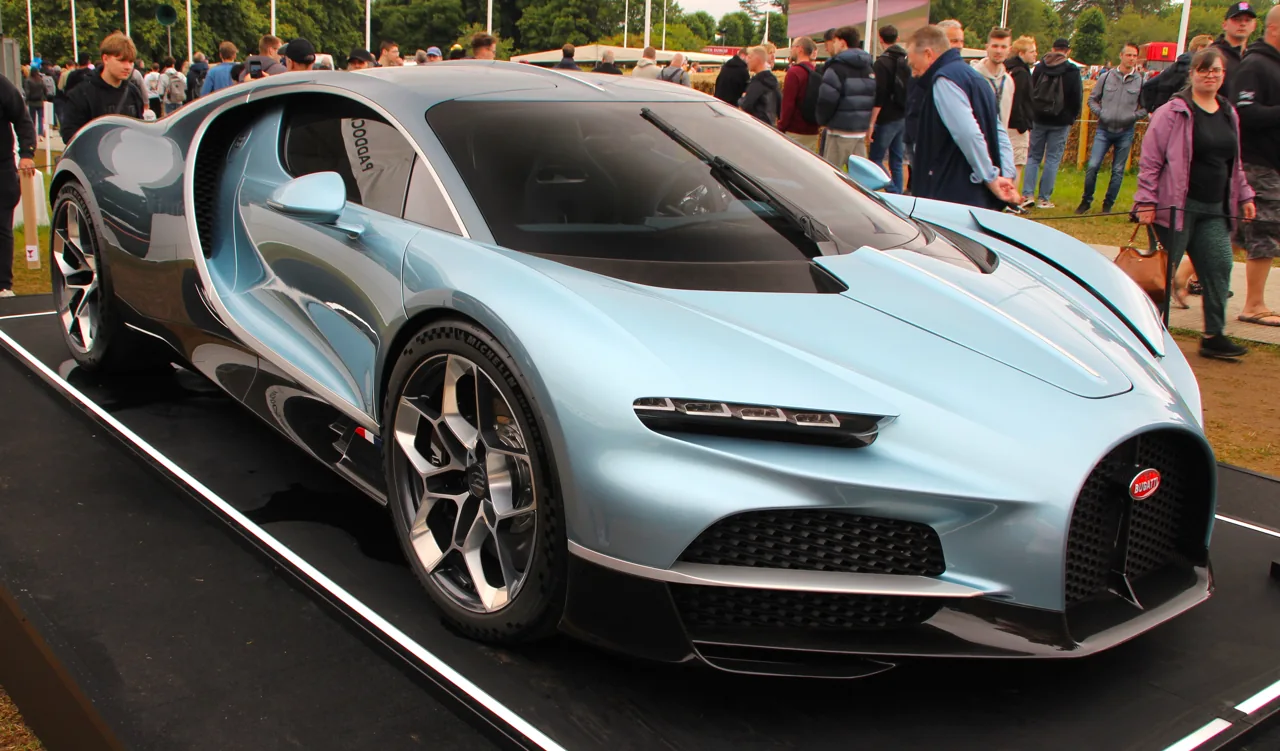
Bugatti's 3 September 2026 development update says the main acoustic work on the Tourbillon is complete following noise-homologation testing. Small refinements remain. The company describes extensive intake and exhaust simulation, with the aim of preserving a recognisable mechanical character while making the cabin suitable for ordinary use.
The sound is generated mechanically rather than through artificial engine audio from the speakers, according to Bugatti. That is a specific development claim. It should not be expanded into a statement that every aspect of the car's homologation or production process is complete: the release still identifies overall type approval as pending. Nor does it establish that customer deliveries have begun.
Why this deserves more than a loudness headline
The interesting question is not whether a V16 can make an impressive noise. It is whether the sound helps the driver understand what the engine is doing. Volume alone is a blunt instrument. A car can be very loud while providing little useful distinction between light throttle, rising load and a meaningful change in engine speed.
We think a successful supercar soundtrack should have shape. It should give an occupant information as well as theatre, and it should change in a way that corresponds to the controls. That is our editorial criterion, not a conclusion that the Tourbillon already meets it. A promotional film can illustrate the intention, but it cannot reproduce the experience from inside a moving car.
The new powertrain also presents a question of identity. Tourbillon is succeeding a long W16 era with a different mechanical layout and hybrid assistance. Simply reproducing an old sound would be a strange objective if the machinery no longer works in the same way. The more convincing ambition is to preserve recognisable character while allowing the new engine to have a voice of its own.
Refinement is part of the supercar brief
It is easy to discuss refinement as if it were the opposite of excitement. We disagree. A car that offers an occasion on demand can be more persuasive than one that imposes the same intensity during every minute of a journey. The ability to change character matters particularly when a manufacturer presents a very powerful car as usable beyond occasional demonstrations.
That gives an eventual road assessment a practical agenda. We would want to know whether conversation remains possible during an unhurried drive, whether unpleasant frequencies appear at a steady speed and how the sound changes when the occupants open a window. None of those questions can be settled by counting cylinders or measuring a single peak sound level.
The hybrid element adds another layer. Quiet operation and combustion operation need to coexist within one vehicle identity. The transition between them could be part of the car's appeal, but it could also feel inconsistent if the surrounding controls and cabin cues do not make sense together. That is a question to investigate through experience rather than resolve from a launch specification.
Mechanical authenticity is a beginning
We welcome Bugatti's stated decision to make the actual machinery the source of the engine sound. It creates an understandable connection between what is working and what the occupants hear. Yet authenticity is only a starting point for criticism. A mechanically generated sound can still be poorly balanced, tiring or insufficiently informative.
Likewise, an acoustically restrained car is not automatically lacking character. There are several legitimate ways to create a memorable experience. The test is whether the choices suit this particular vehicle's purpose, rather than whether they satisfy a universal rule that every supercar must be louder than its predecessor.
This is also why recordings need context. Microphone position, editing, playback equipment and the environment all influence the impression a viewer receives. We can discuss what a manufacturer shows and explains while remaining clear that we have not heard the Tourbillon from its driver's seat.
The milestone and the remaining questions
The update is useful because it describes a specific development milestone rather than another static reveal. It gives readers a clearer sense of the work between an announced powertrain and a finished vehicle. Our wider Tourbillon guide explains the engine, hybrid architecture, cabin and production plan; this story concerns the acoustic phase within that programme.
The next valuable evidence would be a final customer specification and an independently documented assessment in representative conditions. We would be particularly interested in the range of character available at ordinary speeds, because most owners cannot spend a whole journey near the engine's most dramatic operating point.
The SuperCarNews view
Sound can be one of the strongest reasons to remember a supercar, but it deserves more thoughtful coverage than an instruction to turn the speakers up. Bugatti's update is interesting because it makes acoustic character part of the engineering brief.
Our preference is for a sound that communicates, develops and belongs to the machinery producing it. The Tourbillon's programme gives us a clear set of questions to follow. It does not give us permission to pretend we have already answered them from behind the wheel.
Sources & further reading
Reporting is based on the manufacturer material below. Photographs are credited separately.
- Bugatti: Creating the sound of a new era · 3 September 2026
Explore the manufacturer directory for company history and model lineups.