
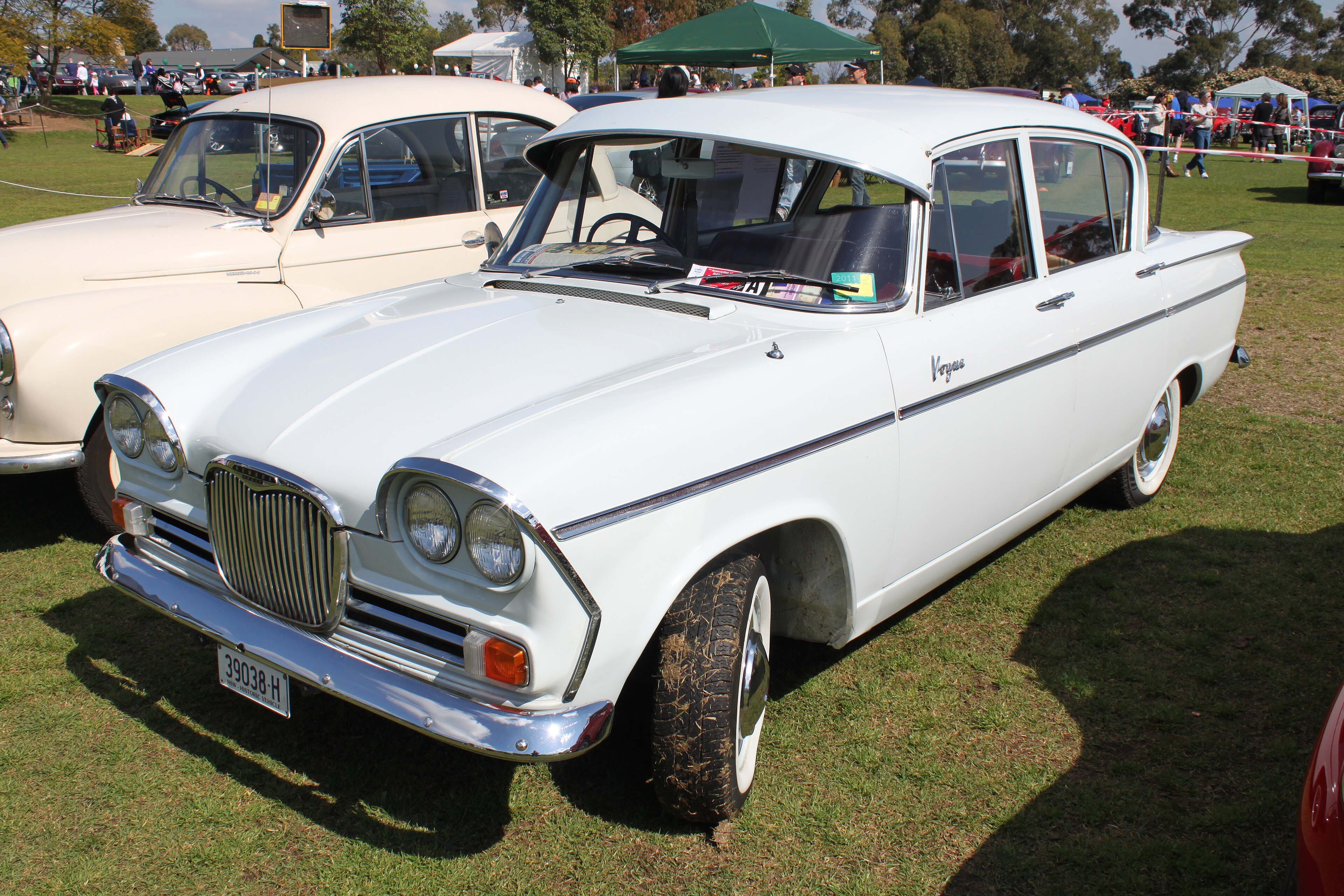
In Britain, Vogue belonged to Singer. In Australia, the same family name appeared under Humber. That badge change is the centre of the local story, but it is also the source of many loose specifications. A British Singer Vogue provides the design context; it does not automatically tell us what engine, trim or transmission an Australian Humber received.
Rootes had assembled cars in Australia since 1946, beginning with the Hillman Minx and later handling Hillman, Humber and Singer products at Port Melbourne.1 By the early-to-mid 1960s, local assembly and separate marque positions gave the Australian organisation room to package familiar components differently. The Humber Vogue was one result.
Why Humber carried the name
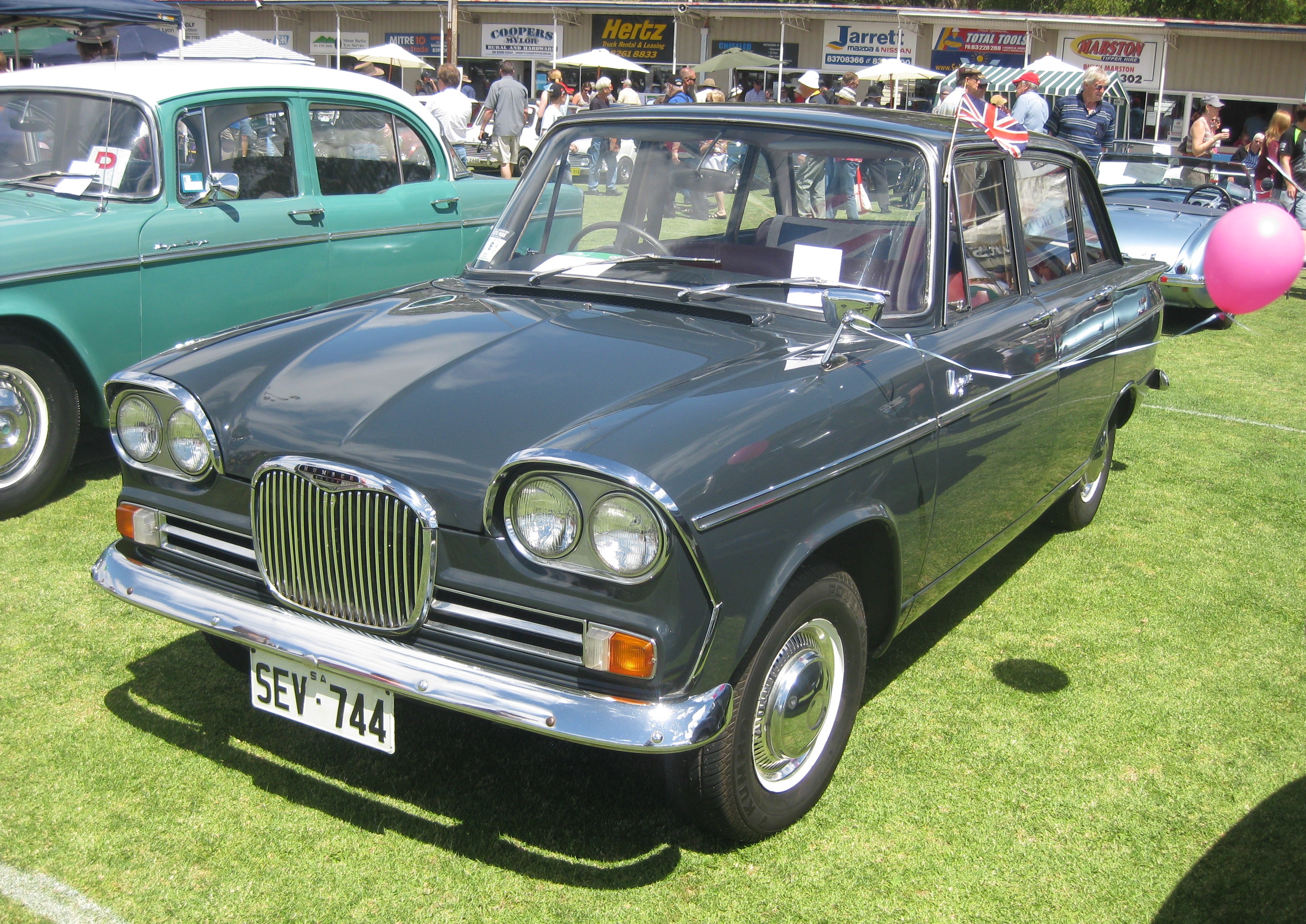
Australian club and specification sources identify the local-market car as a Humber Vogue, while the corresponding British model was sold as a Singer Vogue.234 The use of Humber moved the car towards a more upmarket identity within the Rootes family. It also created an Australia-specific model description that needs local evidence.
The timing sits close to corporate change. Rootes' Australian affiliate merged with Chrysler in December 1965.1 The Vogue therefore belongs near the end of Rootes Australia's independent operation, before Chrysler's control reshaped the local range.
Published start and finish dates conflict. Common summaries use 1962-65, while club and surviving-car accounts often frame the car around 1963-66.12 Without a dated Australian launch announcement and final production record, "early-to-mid 1960s" is safer than claiming one exact span. RedBook has separate records for 1964 and 1965 Humber Vogues, which at least corroborates sale under that make in those years.34
One surviving car, used carefully
The Hillman Car Club of South Australia documents a 1964 Humber Vogue Series II sold new by an Adelaide Rootes dealer in September of that year.2 It is described with a 1,600 cc engine, Borg-Warner 35 automatic and column selector.2 That is valuable evidence for one chassis and one transaction.
It is not a universal specification sheet. Local content and running changes could produce differences, and a surviving car may itself have been modified. The correct use of the club account is to show that this configuration existed, then verify another car from its own plates, paperwork and physical details.
The same restraint applies to British Singer data. Series labels, engine capacities and trim may look transferable, but Australian assembly timing did not always follow British introductions precisely. A registration year can also lag build or sale, further blurring neat model-year tables.
What local assembly involved
"Locally assembled" can describe a range of industrial arrangements. It does not necessarily mean every panel, trim piece and mechanical component was manufactured in Australia. Rootes combined imported designs and components with Australian assembly and local content requirements. Establishing an individual Vogue's exact local content requires period production or parts records, not a general statement about the company.
The Port Melbourne setting matters because it puts the car inside a network of suppliers, dealers and related Rootes models. Shared mechanical parts could help serviceability, while marque-specific trim gave dealers a distinct product. The Vogue was smaller than the traditional image of a Humber, which makes the badge choice interesting: luxury was being expressed through appointment and position rather than sheer size.
By the middle of the decade, that strategy faced both market competition and corporate upheaval. Chrysler's involvement changed the future of Rootes operations in Australia. The Vogue did not become a long-running local line, and its unusual badge makes surviving examples easy to misidentify today.
Authenticating an Australian Vogue
Start with the car's identity plates and record every character. Compare chassis, body and engine numbers with Australian club records, period registration and sales paperwork. A British decoder may establish the underlying family but should not be the only authority used to call the car an Australian Humber.
Check Humber-specific badges and trim for age, attachment and consistency. Fresh holes, mixed fasteners or reproduction pieces do not necessarily invalidate a car, but they need an explanation. Trace ownership through registration papers and invoices, especially if the car has crossed states or spent time off the road.
Mechanical inspection should identify the actual engine and transmission rather than assume the documented 1964 example's configuration. For an automatic, verify the unit and selector arrangement. Check cooling, fuel delivery, braking and steering with attention to long storage, because rarity often means a car has covered little recent mileage.
Body condition can be difficult where replacement panels and model-specific trim are scarce. Inspect sills, floors, suspension mounting areas and prior repairs on a hoist. Ask clubs about parts interchange, but confirm fit before buying components from a related Hillman or Singer.
A small car with a complicated passport
The Humber Vogue is best understood as an Australian Rootes product, not simply a Singer with different lettering. Local branding, assembly and dealer strategy gave it a separate market identity. Yet the public record is thin enough that dates and specifications should remain qualified.
That uncertainty is part of responsible history. One documented survivor tells us what one buyer received in Adelaide in 1964.2 RedBook confirms the Humber name in the Australian market for 1964 and 1965.34 Club history supplies the Port Melbourne and corporate setting.1 A future factory ledger or dated brochure could sharpen the boundaries; until then, the evidence supports a careful range rather than a false precision.
Survivors can help close those gaps if their information is collected consistently. Clubs can record plate details, build features and original paperwork with owner permission while withholding personal information from public registers. Patterns across several cars may reveal running changes, but they should be published as observations until matched with factory material. The Vogue is rare enough that every documented chassis matters, and scarce enough that one exceptional car must not become the specification for all the others.
Sources and further reading
References supporting the reporting and practical context on this page.


_Boss_355_R_SPEC_sedan_(23000420394).jpg)
