
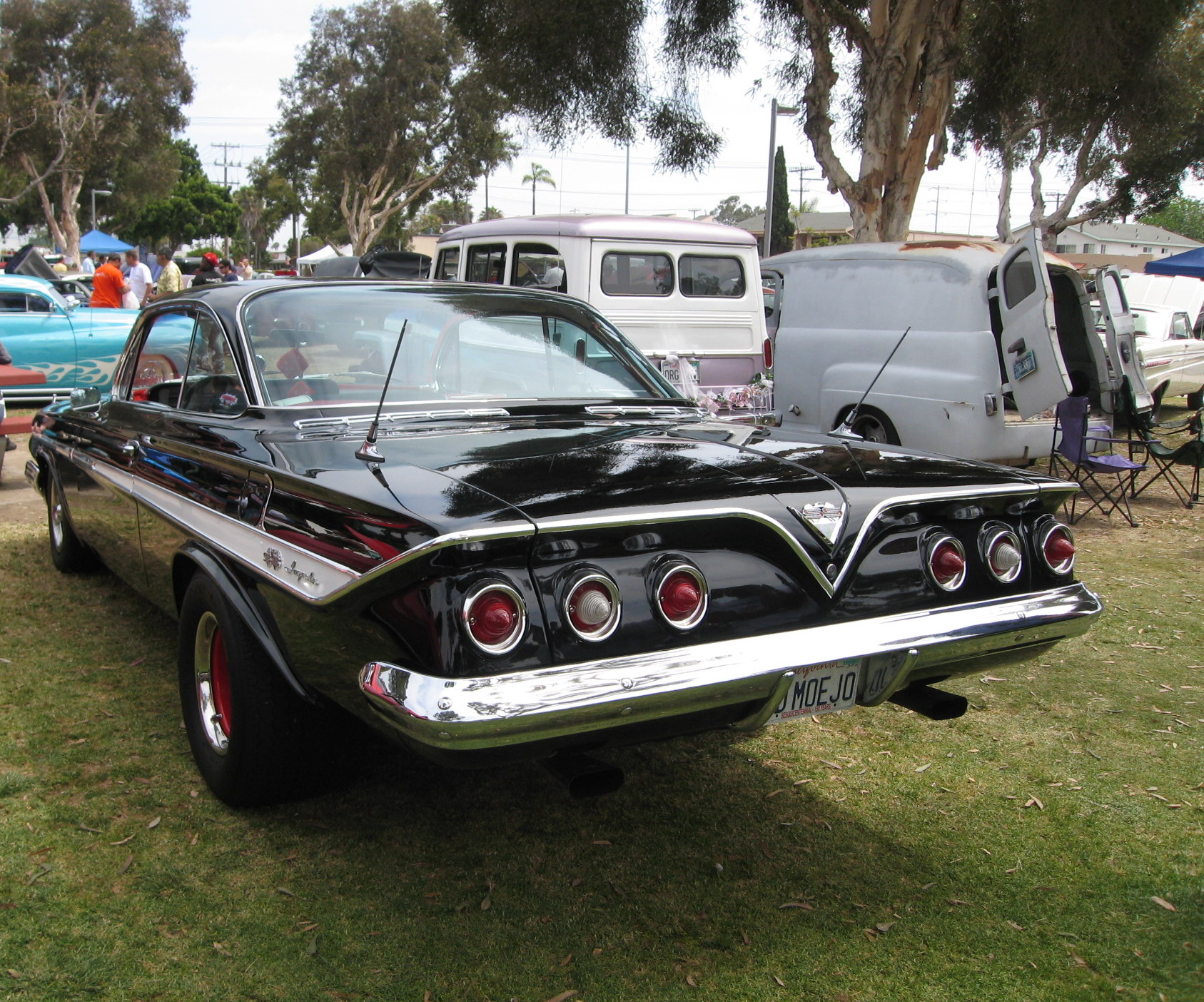
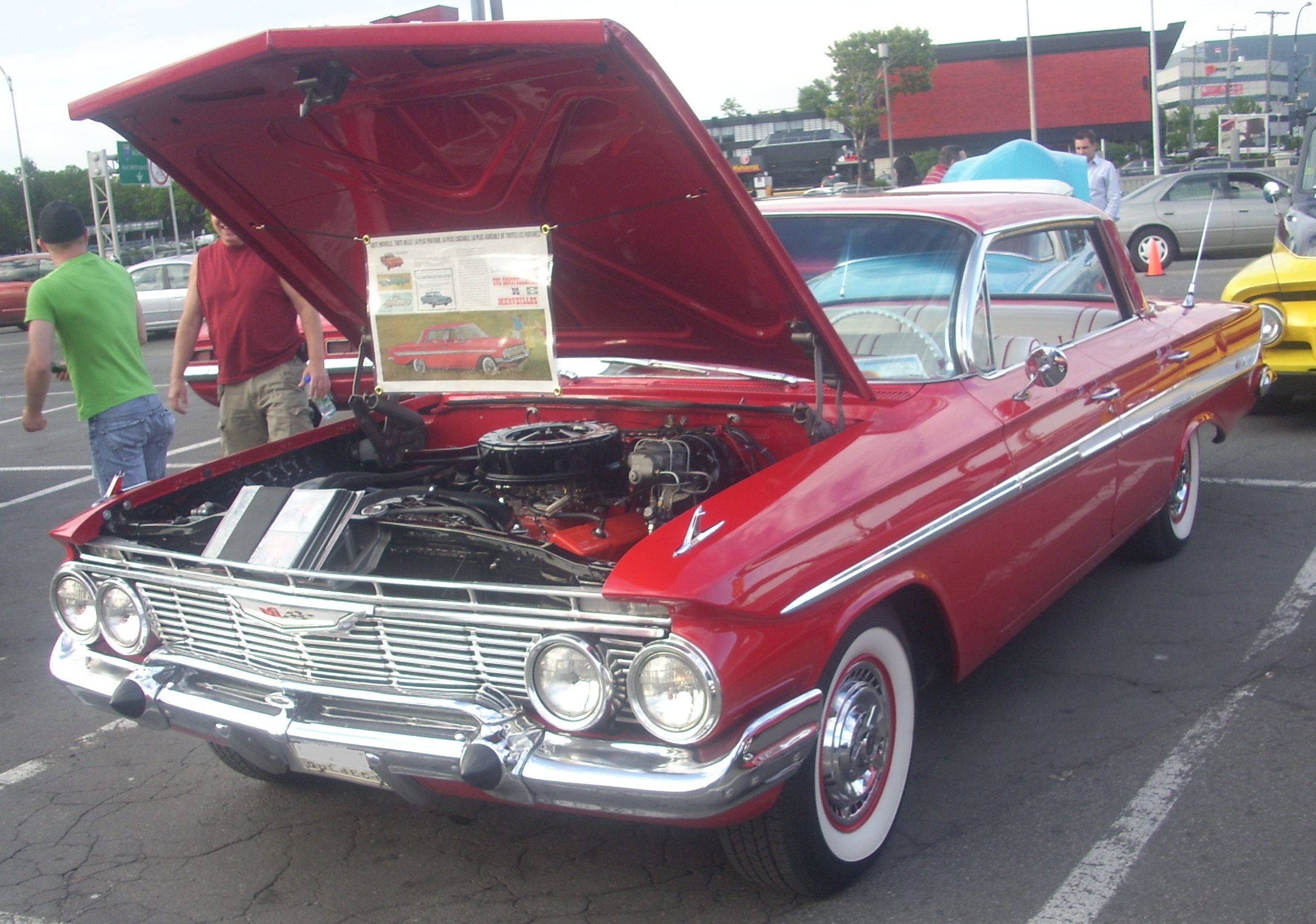
A four-door 1961 Chevrolet Impala wearing Super Sport trim presents an awkward historical question. Chevrolet's February 1961 specifications introduced RPO 240 for all 1800-series Impalas except the Nomad wagon, wording broad enough to include the listed four-door bodies.1 Secondary specialist accounts report 453 SS-equipped Impalas for the year, but the reviewed sources do not provide a factory body-style breakdown or document a completed four-door example.34 Broad eligibility does not, by itself, prove that Chevrolet completed a four-door SS.
The uncertainty is worth preserving. Cars were modified when new, dealers installed accessories, and restorers have spent decades moving badges, engines and trim between bodies. On the other hand, an unusual body style should not be dismissed merely because it falls outside the familiar collector narrative. Authentication has to move from claim to document.
What the 1961 SS package was
The Super Sport was an option package rather than a separate model series. Chevrolet's supplement puts SS emblems, simulated knock-off full wheel discs, black wheels, an instrument-panel assist bar and four-speed floor-shift trim under the RPO 240 package heading.1 It separately lists heavy-duty springs and dampers, power steering, power brakes, metallic brake linings, a tachometer, an instrument-panel pad, narrow-whitewall tyres, an eligible transmission and one of four high-performance 348/409 engines as mandatory companion options.1 Secondary accounts report the RPO 240 price as US$53.80; power steering should not be described as included in that price merely because the factory required it alongside the package.2 Much of the visible identification can therefore be reproduced or moved between cars.
Engine choice creates a second misconception. The first SS did not automatically mean 409 power. Secondary specialist summaries divide the reported 453-car total into 311 with 348-cubic-inch engines and 142 with the newly introduced 409.34 Chevrolet's supplement lists three eligible high-performance 348s and a 360 hp 409, with the transmission among the mandatory companion choices.1 A car can therefore have a period-correct 348 and still fit the recognised SS pattern, while a 409 under the bonnet does not establish an SS identity.
The figures themselves come from specialist and collector literature rather than a public VIN-by-VIN Chevrolet ledger. They are repeated consistently, but they do not answer every body-style question. That is why "one of 453" should be supported by a car's own paperwork rather than inferred from trim.
Why the four-door claim persists
Chevrolet's own model-application line covers all 1800-series cars except the Nomad wagon, and its model table includes four-door Impala bodies.1 The independently reviewed material nevertheless produced no chassis-specific factory record for a completed four-door RPO 240 car. These propositions can coexist: published eligibility does not show which unusual combinations Chevrolet accepted, scheduled and completed.
Dealer practice muddies the water further. A customer could buy a four-door Impala and have SS-style accessories added by a dealer. That would be an interesting period-customised Chevrolet, especially with an invoice, but it would not automatically be the same thing as a factory-assembled SS. Similarly, a car built later from original components is a replica, even if every component is genuine Chevrolet.
No reliable public source reviewed for this page provides a factory record confirming production of a four-door 1961 Impala with the complete SS option. That is not proof that none existed. It means the claim remains unverified and should be advertised that way unless chassis-specific evidence appears.
An authentication method that fits the evidence
Begin with identity, not accessories. Record the VIN exactly, including assembly plant and body-series information, then record the Fisher Body cowl tag without cleaning, restamping or removing it. Photograph attachment points and surrounding paint. A technical identification guide notes that Chevrolet did not encode the Impala SS as a distinct VIN series until 1965-66 and that Fisher Body accessory coding varied by plant and year.5 For a 1961 claim, the tags establish the base car and may offer clues; they do not independently prove RPO 240.
Next look for primary paperwork. A documented-car case study used the original sales invoice, finance papers, dealer check-off sheet, warranties and recorded drivetrain identifiers to establish its history.3 A window sticker, dealer invoice, retail order, build record, warranty booklet or dated registration can carry more weight than a later restoration file. Provenance improves when names, dates, engine details and selling dealer agree across independent documents. A photocopy with no traceable origin is a clue, not a conclusion.
Inspect equipment as physical evidence. Are the tachometer, grab bar, brackets and trim attached in ways consistent with an untouched 1961 body? Do fasteners, holes, wiring routes and paint layers suggest installation when the car was new, or during a later restoration? The answer may require a specialist who knows full-size Chevrolets and can compare the car with documented examples.
The drivetrain needs separate treatment. Check casting numbers and dates, assembly stamps and transmission identity, but avoid the phrase "numbers matching" unless each claimed match is explained. A correctly dated replacement 409 may improve period character without being the engine installed at the assembly plant. Conversely, an original engine does not prove the SS package.
Finally, write the conclusion in layers. "1961 Impala four-door hardtop with period dealer-installed SS equipment" is a meaningful description when supported. "Restored with SS components" is honest for a later build. "Factory four-door SS" requires stronger evidence: preferably a Chevrolet or selling-dealer document tied to that VIN, plus physical details that withstand inspection.
A claim is not a verdict
Collector categories often harden after the cars are built. The 1961 SS sits at the start of a nameplate that later gained clearer model conventions, so it is tempting to read later rules backwards. It is equally tempting to use loose brochure wording to certify anything carrying the right emblems. Neither approach is good enough.
Until a four-door car is tied to the factory SS package by chassis-specific primary evidence, its status should remain disputed. That wording protects buyers and leaves room for a genuine discovery. A rare-car story becomes stronger when the gaps are visible.
Sources and further reading
References supporting the reporting and practical context on this page.
- Chevrolet, *1961 Passenger Car Specifications*, revised February 1961 (independently hosted scan) ↗ ↩
- Chevy Hardcore, "Impala Engine Options: 1961" ↗ ↩
- MotorTrend / Super Chevy, "1961 Chevy Impala SS: When the Impala SS Was Truly Special" ↗ ↩
- Hagerty Valuation Tools, "1961 Chevrolet Impala SS" ↗ ↩
- All Chevy Performance, "How to Decode Chevrolet VIN and Trim Tag Numbers" ↗ ↩
.jpg)


.jpg)