
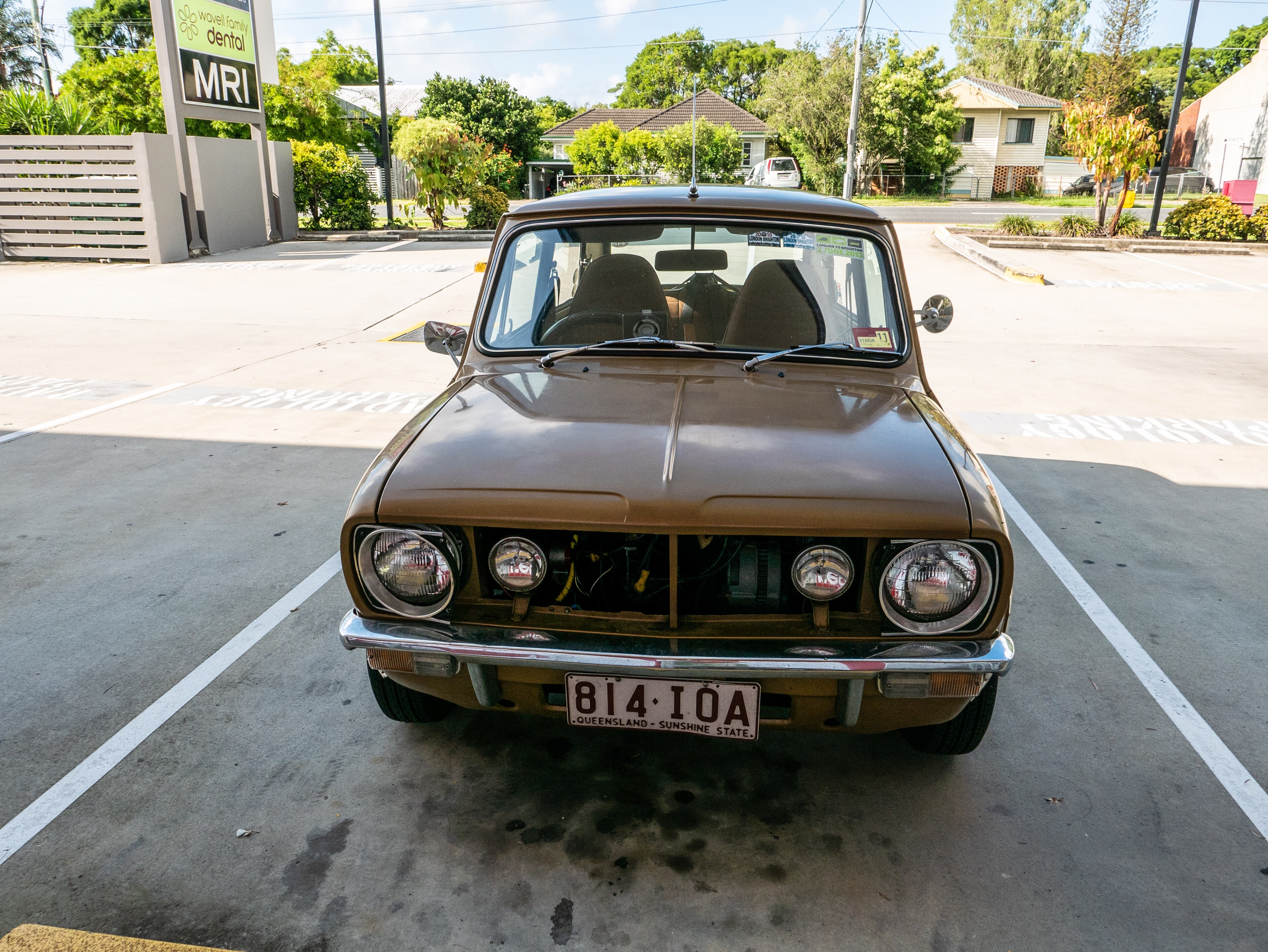
The familiar Mini outline hides a complicated Australian market. Local production, local model names, specification changes and later imports mean that two cars with similar faces may have different identities.1 The first job for a buyer is not deciding which engine tune sounds most exciting. It is establishing what the shell began as and how much of it survives.
The Victorian Mini Club separates the original BMC-derived Mini, produced internationally from 1959 to 2000, from the later BMW-era MINI.1 For Australia, the club estimates that about 200,000 Minis were made in Sydney between 1961 and 1978, while Australian Moke production continued to 1981.1 That estimate gives the local story scale, though it should not be treated as a model-by-model factory ledger.
An Australian family, not one specification
Likely local finds include Morris 850s, Mini Deluxes, Mini Ks, Cooper and Cooper S variants, Leyland Minis and Clubmans.1 Imported Rover Minis add later cars with their own equipment and identifiers. Badges alone are unreliable because parts interchange readily and sporting replicas have long been popular.
Australian assembly was more than a shipping footnote. Local content, trim, body details, compliance requirements and model timing can differ from British references. A UK identification table may be helpful, but it cannot settle an Australian car's identity. Compare body and engine numbers, compliance information and physical features with Australian club records and period documentation.
Cooper and Cooper S claims need special care because they affect value. A later engine, disc brakes, twin carburettors and the right badges can create an enjoyable modified Mini without making it an original Cooper S. Describe such a car for what it is. A replica with good workmanship is preferable to a valuable identity asserted on appearance alone.
The shell is the expensive part
Mechanical parts availability is generally strong, but a catalog full of repair panels does not make structural restoration cheap.12 The Mini's compact monocoque depends on interconnected panels. Corrosion in one visible area can continue behind seams and trim, and poor earlier repairs may conceal rather than restore strength.
Inspect beneath carpets and insulation. Look closely at floors, inner and outer sills, A-pillars, door steps, wheel arches, panel seams and the areas around the front and rear subframes.23 Water staining, swelling seams, mismatched underseal and fresh paint in isolated areas deserve investigation. A magnet and paint-depth gauge can help, but neither can see inside a boxed section.
Panel fit gives clues rather than proof. Uneven doors, a distorted roof gutter or changes in seam shape may point to previous impact or sill work. Photographs of a restoration are useful only if they show the structure before it disappeared under primer. Ask who performed the work and whether invoices identify the panels used.
A hoist inspection by someone who knows Minis is far more useful than a polished-car walk-around. The specialist should examine subframe mounting areas and repairs from below, then check whether corrosion or accident damage affects alignment. If the seller will not permit that inspection, price and rarity do not make the risk smaller.
Mechanical checks after identity and structure
Start the engine from cold. Smoke at start-up or under acceleration needs diagnosis. Emulsified residue under the oil filler cap can have several causes, including condensation, but alongside coolant loss or overheating it warrants closer testing.2 Listen for timing, bearing and valvetrain noise without pretending a brief driveway check replaces compression or leak-down tests.
Drive every gear once the car is warm. Poor selection, jumping out of gear or heavy synchromesh wear can turn a cheap purchase into a drivetrain rebuild. Check clutch take-up, oil leaks, cooling behaviour and charging. A tuned engine should come with details of its internal specification rather than a guess based on noise.
Suspension type and condition matter. Hydrolastic-equipped cars should sit evenly and show no obvious fluid leaks; an uneven stance may indicate leakage or a system needing service.2 Other Minis use dry rubber-cone suspension. Confirm what the particular model should have, then distinguish an accepted conversion from neglected or mixed components.
Brakes and steering should be assessed as systems. Note pulling, vibration, pedal travel and steering play, then have faults inspected. A disc-brake conversion may be desirable but should be documented, engineered where required and matched with suitable wheels and hydraulics.
Build an evidence file
Record numbers exactly and photograph them before discussing value. Gather registration history, receipts, restoration images and club correspondence. Check whether engine and body changes are reflected in state records. For a modified car, ask for engineering approvals rather than accepting "never had a problem" as evidence.
Current asking prices on old club pages are not valuations. The market moves, and condition differences are too large for a single range to mean much. Compare genuinely similar Australian cars close to the purchase date and budget for an independent inspection.
A sound Mini does not have to be untouched. It does need an honest identity, a structurally competent shell and a record that explains major changes. Get those three things right and the model's excellent parts network becomes an advantage rather than an excuse to buy a rusty car.
Keep the inspection report even if the purchase does not proceed. It creates a reference for the next car and makes vague descriptions easier to challenge. For the car you do buy, store number photographs, engineering papers and restoration invoices in two places. Minis often change owners, engines and trim over long lives; a well-kept evidence file prevents an honest modification from becoming a confused identity several sales later.
Sources and further reading
References supporting the reporting and practical context on this page.


.jpg)