
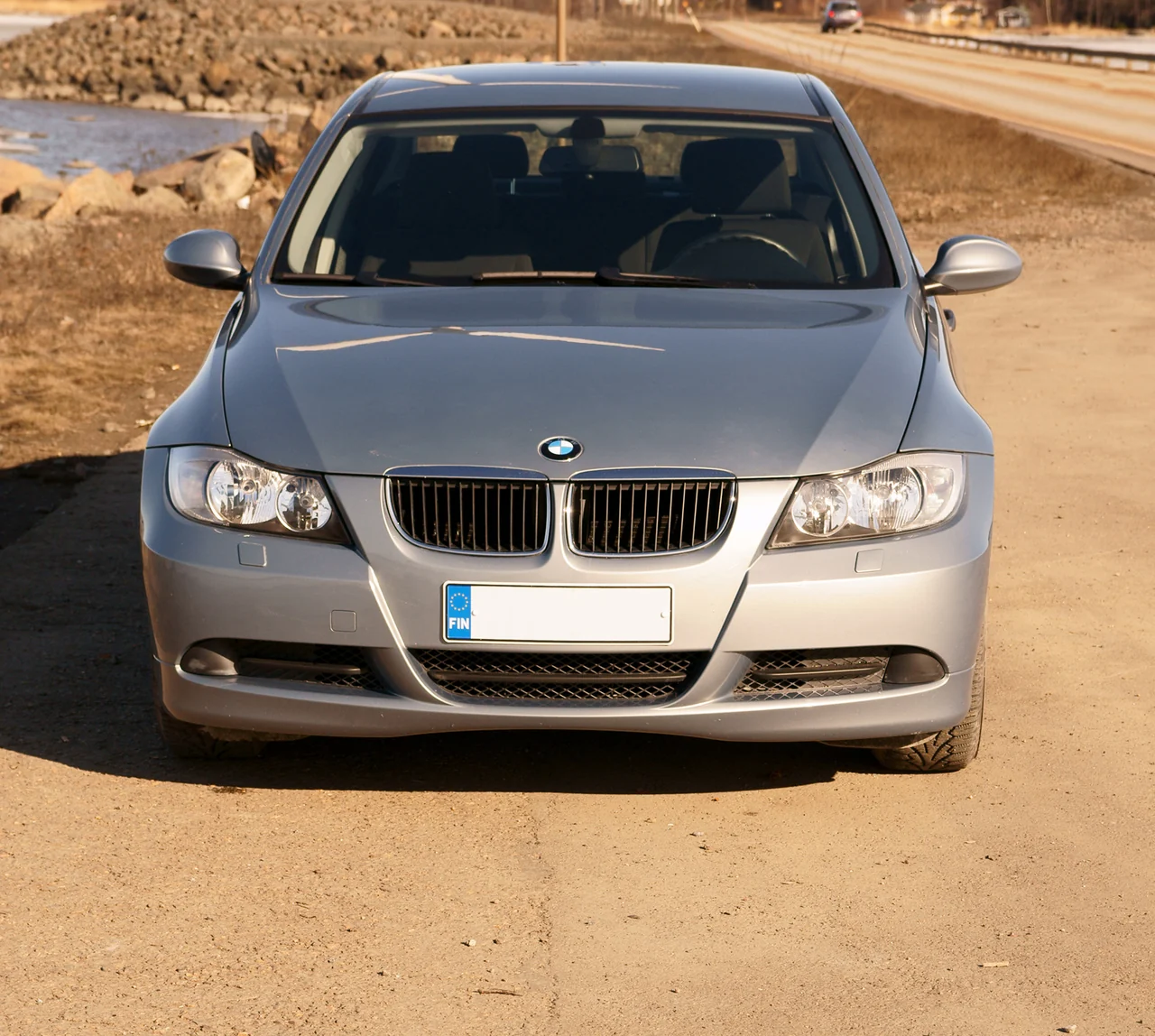
Choose the version before chasing the specification
The E90/E92 generation offers a broad route into an older performance BMW, but it is also a reminder that one generation can contain very different ownership propositions. A naturally aspirated six-cylinder saloon, a turbocharged coupé and a V8 M3 should not share one budget or one inspection brief. Start with the body, engine and gearbox you actually want, then compare like with like.
Our preference would be for a car whose original purpose remains easy to understand. If the goal is a usable daily classic, coherent servicing, working climate control, sensible tyres and an unmodified electrical system deserve more weight than a long list of aftermarket additions. If the aim is a more specialised performance car, the maintenance file and the inspecting workshop need to reflect that choice.
The attraction of the E92 is not simply that it has fewer doors. Its proportions and separate body identity make it a distinct alternative to the E90 saloon. The saloon, meanwhile, keeps the performance-car idea attached to a more practical cabin. Neither body makes the engine's history less important, and an M Sport appearance package should not be confused with an M3 powertrain.
We would compare candidates using the cost of bringing each to the same starting condition. Include urgent repairs, due servicing, worn consumables, missing equipment and any investigation the inspector could not complete. That produces a much more useful comparison than assuming the lower asking price is the cheaper car.
Choose an E9x BMW by the evidence attached to the individual car. E90 and E92 identify different bodies, and the badge does not settle engine, transmission or market specification. Get BMW build data before comparing service history or ordering an inspection.
Know which body you are viewing
The E90 is the sedan. Contemporary GoAuto reporting identifies it as the fifth-generation 3 Series sedan and records Australian sales beginning in June 2005. 1 Its coupe history dates the Australian E92 launch period to October 2006 and describes the twin-turbo 335i as the launch flagship. 2 (Australian secondary launch context; neither source proves an individual car’s build.)
E91 is the Touring and E93 the convertible. Do not treat the four body codes as interchangeable. Manuals, trim, drains, body hardware and inspection access can differ.
| First identification branch | Record |
|---|---|
| Body | E90 sedan, E91 Touring, E92 coupe or E93 convertible |
| Build | Full VIN, production month, market and options |
| Engine | BMW engine code, then physical agreement |
| Transmission | Build specification and installed unit |
| Equipment | Model year and iDrive configuration |
The Australian engine and badge matrix changed over time, and the cited launch sources do not establish a universal badge-to-engine table. Use the advertisement as a lead, then verify it through BMW AIR, ETK or dealer build data.
Powertrain context without shortcuts
BMW’s US-market 2007 coupe release describes its documented 335i engine as a twin-turbocharged inline six with direct injection and an aluminium crankcase, and lists six-speed manual and six-speed Steptronic automatic transmissions. 3 (US-market manufacturer context; verify Australian equipment by VIN.) It provides useful engineering context, but it cannot prove which transmission or trim was sold on a particular Australian VIN.
For N54-powered E90/E92 vehicles within its listed US scope, BMW SI B12 55 06 links complaints including power loss, poor running and long cranking with specified fuel-pressure fault codes. 4 (US service information; symptom, code and build applicability are required.) Use that information carefully. It creates a diagnostic branch when a car has matching symptoms and codes; it does not show that every N54 will suffer the condition, and it does not justify replacing parts from a seller's description.
The cited sources do not establish failure prevalence for electric water pumps, injectors, turbochargers, gaskets, automatic transmissions or iDrive modules. Inspect the car rather than reciting a generic fault list.
Build the document file
Ask for the VIN before travelling and compare it at the car with registration, body identifiers and invoices. Confirm Australian delivery or import status. Obtain a BMW build report showing body, production month, engine, transmission and available options.
Owner manuals differ by sedan or coupe, model year and iDrive configuration. The cited third-party archive warns that its copies are US specification. 8 (Discovery aid only.) Prefer the matching market-specific owner manual, including the Australian glovebox copy for an Australian-delivered car.
Read itemised invoices, not just stamps. Build a timeline showing the work, odometer reading, workshop and any part numbers. Keep gaps visible. Ask for evidence of transmission work, cooling-system work, diagnostic investigations, tyres, brakes and recall completion without assuming that any one job was mandatory at a universal interval.
Recall checks are VIN-specific
An Australian Government record covers specified E8x/E9x vehicles from 2007–2011. 5 A separate Australian record covers a limited population of 2009–2012 vehicles with N51, N52 or N55 engines. 6 (Australian campaign records; applicability is VIN-specific, not a whole-year inference.) Neither record means every car in the broad year range is affected.
Run the BMW Australia live lookup using the verified VIN or registration. Save the result and ask a dealer for a current campaign printout if anything is open or unclear. An invoice line and a current VIN result are stronger evidence than a seller saying "all recalls done".
Inspect cold
Arrange access before the seller starts the engine. Film the key-on lamp check and continuous cold start. Note cranking, idle behaviour, exhaust, unusual sounds and warning messages in plain language. Do not decide which component caused an observation.
Have a BMW-experienced specialist save a full-system scan before clearing anything. Fault history is evidence. A clean scan also does not prove mechanical health, especially if the history has recently been cleared.
For an N54 car with long cranking, poor running or power loss, give the saved faults and symptoms to the specialist. Fuel-pressure and direct-injection diagnosis requires suitable equipment and training.
Static and lift inspection
Inspect the body in dry daylight. Look for inconsistent repairs, water entry, damaged underbody covers and interior evidence that does not agree with the history. Body drains and water paths vary by shell, another reason to identify E90 and E92 correctly.
The workshop PPI should cover:
- body, underbody and structural repair evidence;
- tyre condition and dates, wheel condition and specification;
- brake, steering and suspension condition;
- visible oil, coolant and fuel leaks;
- cooling-system condition without opening it hot;
- installed engine and transmission agreement;
- full-system scan and warning-system operation.
Lifting, cooling-system opening, fuel diagnosis, turbocharger work and brake, steering or suspension work are professional tasks.
Road test by exact powertrain
Do not road-test with unsafe tyres, brake or steering faults, overheating, fuel smell or leak, severe misfire, an oil-pressure warning or an unsafe warning state. Recovery is the correct response.
On a safe legal route, record starting behaviour, normal acceleration, shift quality, steering, braking, vibration, noises and new warning messages. For an automatic, note behaviour in normal operation without forcing harsh manoeuvres. For a manual, record clutch engagement and shift quality. A specialist should interpret the results with scan and lift evidence.
Do not clear codes or accept a high-load demonstration as a substitute for diagnosis. For an E92 M3, continue with the S65-specific service-history checklist.
Purchase assessment
| Area | Evidence satisfactory | Needs diagnosis | Deal-breaker for this buyer |
|---|---|---|---|
| Identity and delivery status | |||
| Invoice history | |||
| Recall status | |||
| Cold start and scan | |||
| Body and water ingress | |||
| Tyres, brakes, steering, suspension | |||
| Engine and cooling | |||
| Transmission |
Ask the workshop to separate immediate safety work, confirmed faults and matters needing further tests. None of the cited sources establishes a current price or ownership-cost figure, so cost the actual written findings using current local quotes.
Before ordering parts
Any parts request must include VIN, production date, market, body, engine, transmission and installed hardware, with a current supersession check by the supplier or workshop.
Sources and further reading
References supporting the reporting and practical context on this page.
- GoAuto: Australian E90 3 Series sedan launch ↗ ↩
- GoAuto: Australian E92 3 Series coupe launch ↗ ↩
- BMW Group: The all-new 2007 BMW 3 Series Coupe (US-market engineering context) ↗ ↩
- BMW SI B12 55 06: N54 diagnostic bulletin (US service information with limited applicability) ↗ ↩
- Australian Government Vehicle Recalls: REC-000140 ↗ ↩
- Australian Government Vehicle Recalls: REC-000119 ↗ ↩
- BMW Australia recall status tool ↗
- BMWSections: BMW 3 Series owner-manual archive (third-party, US-specification archive) ↗ ↩