
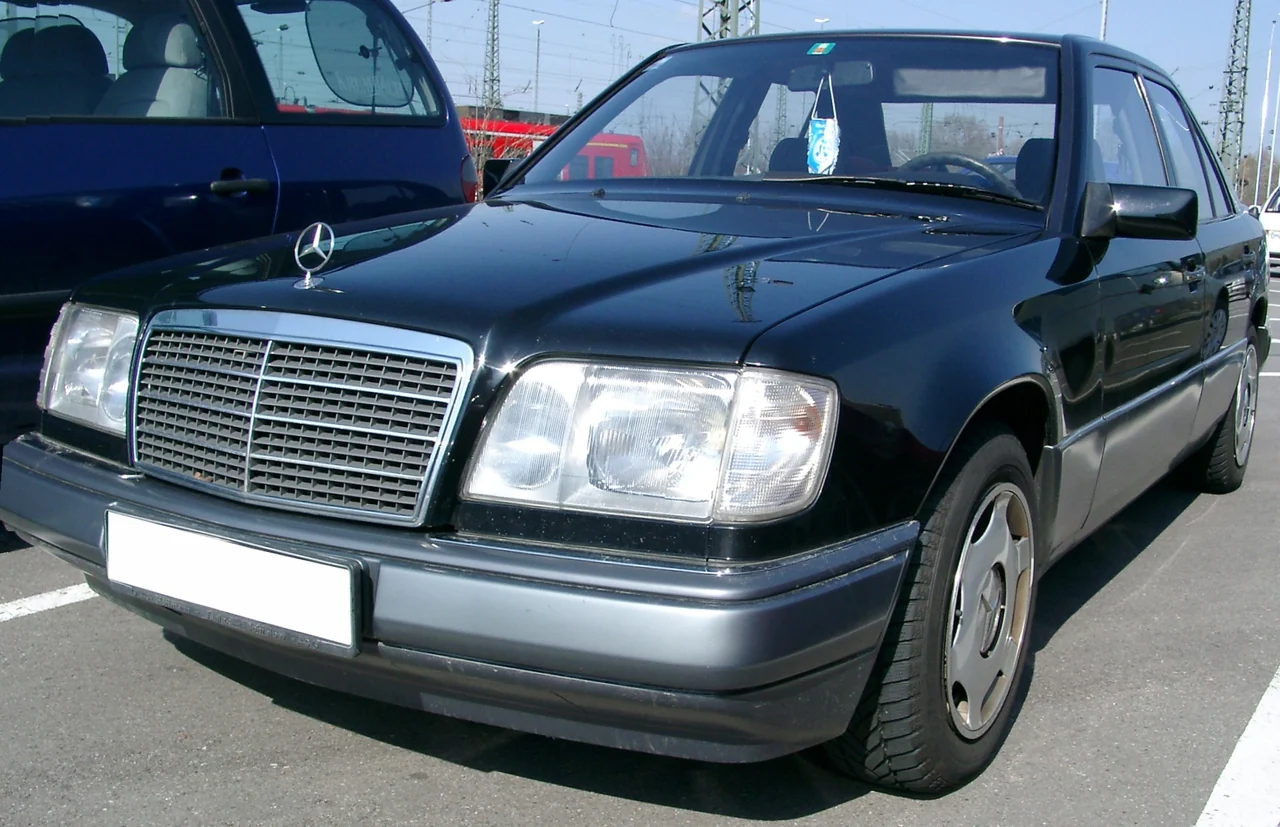
A low odometer reading does not give an old W124 immunity from time. Fluids age, rubber changes, corrosion develops and previous repairs can create their own maintenance needs. A useful baseline separates known work from unknown work, checks safety first and avoids replacing parts simply because an internet list says so.
Mercedes-Benz divides 124 saloon history into three phases, from 1984 through 1995, with several engine and drivetrain families.123 Exact identity comes before maintenance planning.
Stage 1: establish what the car is
Record the chassis/type, engine number, gearbox and market history. The archive’s 230 E uses M 102.982, while the 220 E uses M 111.960. Both manufacturer records list manual and optional automatic configurations.45 Tune-up parts, fluids and adjustment procedures therefore cannot be chosen from the body shape or “W124” label alone.
| Evidence | Record now | Why |
|---|---|---|
| Vehicle identity | VIN, type, build details and market origin | Anchors all later parts and procedure research |
| Powertrain | Physical engine and gearbox identifiers | Prevents engine-family and transmission assumptions |
| History | Date, odometer, parts/products and workshop | Separates credible work from vague claims |
| Current condition | Leaks, contamination, warnings and test findings | Directs diagnosis before routine replacement |
| Options | 4MATIC, self-levelling and other fitted systems | Adds the correct factory-procedure branches |
An invoice that says “full service” is weak evidence. A good baseline record names the product approval or part, quantity where relevant, date, odometer, observations and next action.
Stage 2: safety before convenience
Book a qualified inspection of tyres, brakes, steering, suspension, wheel bearings and structural condition. The cited 220 E record describes dual-circuit hydraulic brakes with ABS and disc brakes, recirculating-ball power steering and independent suspension.4 Original specification does not say anything about their present condition.
- Check tyres for correct size, age marking, damage and even wear.
- Inspect brake friction components, hydraulics and warning operation.
- Check steering for leaks and free play, then inspect joints and mounting points.
- Assess bushes, springs, dampers and alignment evidence.
- Inspect floors, lifting points and structural areas before raising the car.
- Check battery security, charging, grounds and fuses.
Do not work beneath a car supported only by a jack. Springs, brakes and pressurised hydraulic systems can cause serious injury. Safety defects must be rectified and verified by a qualified person before normal use.
Stage 3: fluids, leaks and cooling
Do not drain every fluid blindly. First identify each unit, inspect level and condition correctly, and explain any contamination or active leak. Select products by exact manufacturer specification, not colour or forum shorthand.
Cooling-system baselining should include professional leak or pressure testing where appropriate, hose and belt condition, and the verified coolant specification for the engine. No generic fill quantity belongs across the W124 range. Never open a hot, pressurised cooling system.
| Finding | Next action |
|---|---|
| Credible recent invoice with correct specification | Inspect condition and retain the record |
| Unknown product or missing date | Confirm system and plan replacement with a specialist |
| Cross-contamination or active leak | Diagnose before routine servicing |
| Brittle hose, damaged belt or pressure concern | Stop and have the system assessed |
| Stable system with sound evidence | Follow the exact schedule rather than inventing a shorter interval |
Stage 4: drivability and powertrain
With basic safety established, assess cold start, idle, hot restart, temperature behaviour and road performance. A symptom is a question, not a parts order.
The 230 E and 220 E use different engines, and their ignition and fuel work is not interchangeable. Identify the actual gearbox before selecting fluid, filter or adjustment information. Optional 4MATIC needs its own driveline inspection and factory procedures.
Have leaks, noise, rough running and shift behaviour diagnosed. Fuel systems involve fire and pressure hazards. Keep generic torque values, fluid brands and intervals out of the plan unless the exact factory procedure supplies them for the identified car.
Stage 5: age-sensitive comfort and option systems
Once the car is safe and mechanically stable, turn to climate control, windows, locks, lighting, sunroof and audio equipment. Estates or specially equipped cars may add self-levelling hydraulics; 4MATIC adds further driveline hardware. These systems should be inspected and serviced under the relevant factory procedure, not folded into a generic W124 package.
Record any water entry and ask the inspecting workshop to trace its source. Do not infer the cause from damp trim alone.
Printable baseline checklist
- [ ] VIN, type, engine and gearbox recorded
- [ ] Market and registration history reconciled
- [ ] Credible invoices separated from unknown work
- [ ] Structure and lifting points professionally inspected
- [ ] Tyres, brakes, steering and suspension passed
- [ ] Battery, charging, grounds and fuses checked
- [ ] Fluid condition and leaks assessed by system
- [ ] Cooling system inspected to engine-specific procedure
- [ ] Cold and hot drivability checked
- [ ] Transmission identified and assessed
- [ ] 4MATIC or self-levelling branch added where fitted
- [ ] Comfort systems and water entry checked
- [ ] Every completed task documented with date and odometer
- [ ] Deferred work listed with priority and responsible workshop
This baseline is a way to sort known work from unknown work. Preserve credible evidence, test what can be tested and repair confirmed defects rather than replacing parts solely because the car is old.
Keep parts research at category level until every fluid approval and part number has been checked against the exact vehicle.
Sources and further reading
References supporting the reporting and practical context on this page.