
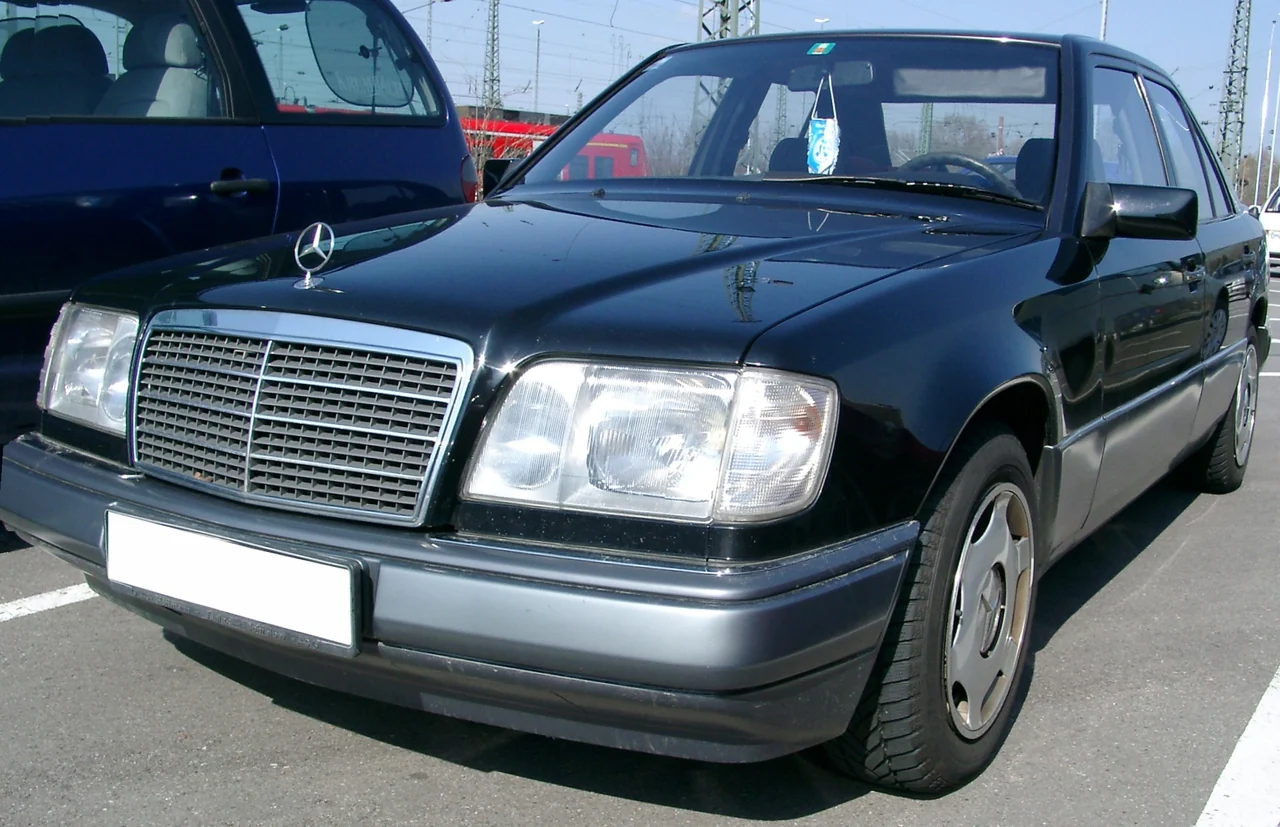
The appeal is in the complete car
The 124 series makes most sense as a classic chosen for its overall design and intended use. The saloon offers a restrained shape, the estate adds carrying ability, and the coupé and cabriolet turn the same broad family into something more suited to leisure. Those differences matter more to a sensible purchase than treating every 124 as an interchangeable expression of old Mercedes quality.
We would start with a sound, complete body and an interior whose condition matches the seller's account. Structural repair, water ingress and missing model-specific fittings can consume the attention that an owner hoped to spend using the car. Fresh paint deserves examination, not automatic praise. A tired finish can be assessed openly; an attractive finish over uncertain repairs is harder to understand.
Engine choice should follow the intended job. A more modest version can be a satisfying way to preserve the series' original touring role, while the larger-engine and specialist derivatives introduce their own appeal and maintenance requirements. Rarity is not a substitute for a suitable workshop or an understandable service file.
Our buying position is to value continuity: identifiers that agree, invoices that describe real work and an inspection that explains both strengths and defects. A classic does not have to be cosmetically perfect to be worthwhile. It does need a condition and repair plan the next owner can afford to support.
A Mercedes-Benz 124 can be a durable old car and still be a poor buy. Every example is now old enough for corrosion, repairs, storage and incomplete maintenance to overwhelm any general reputation. Begin with identity, then judge structure, safety and mechanical condition.
“W124” is commonly used for the whole family, but Mercedes-Benz produced saloon, estate, coupé and later cabriolet forms.13 State the body code and exact type when researching a car. Australian deliveries, private imports and other market specifications can differ from German archive records.
Three production phases
Mercedes-Benz divides the saloon history into 1984–1989, 1989–1993 and 1993–1995 E-Class phases.123 The company first used the E-Class designation for the 124 series in 1993.3 This explains why earlier names such as 200 E and 230 E sit alongside later forms such as E 220.
| Phase | Manufacturer chronology | Buyer’s use |
|---|---|---|
| Early | 1984–1989 | Establish original type and equipment; inspect present condition independently |
| Middle | 1989–1993 | Check exact engine, driveline and body rather than relying on appearance |
| E-Class | 1993–1995 | Expect later naming, but verify build identity and market specification |
Mercedes-Benz described weight reduction, aerodynamic work, high-strength steel and separate safety development at launch.1 That is historical context, not evidence that a particular car is structurally sound or meets present crash standards.
Engine, driveline and body matter
The 124 range covered multiple petrol and diesel engines, rear-wheel drive and 4MATIC, so an inspection must branch according to the car.12 The archive’s earlier 230 E record uses the M 102.982 engine, while the 220 E record uses M 111.960.45 That difference alone rules out one generic tune-up or service-parts list.
Estates may have self-levelling equipment; some cars may have 4MATIC, a sunroof or other systems that add their own inspection questions. Confirm what was built and what remains fitted.
| Candidate | Evidence that deserves weight | Evidence that needs checking |
|---|---|---|
| Standard rear-drive saloon | Matching identifiers and long itemised history | Badge-led engine claims or unexplained trim changes |
| Estate | Body/type proof and documented suspension work | Rear ride-height or hydraulic symptoms without diagnosis |
| 4MATIC example | Exact type and specialist driveline records | Generic “all-wheel drive serviced” notation |
| Coupé or cabriolet | Correct body identity and inspected structure | Seller relying on rarity rather than condition |
Body and corrosion inspection
No rust location is universal. Climate, drains, coatings, accident repairs and storage all change the result. Still, a specialist should examine structural mounts, floors, sills, jacking points, screen apertures, suspension and subframe areas, plus signs of previous repair.
Look for mismatched finishes, disturbed seams, overspray and water entry, but do not attempt to pronounce a repaired car sound from a driveway check. Structural corrosion and crash repairs need professional assessment, preferably on a lift using the correct lifting points.
Mechanical and road-test checklist
Ask to see the car before it is warmed up. Continue the test until normal operating temperature, provided the car first passes basic safety checks.
- Confirm VIN/chassis and engine numbers against registration and records.
- Record exact body, engine, transmission and market origin.
- Watch cold start, hot restart, idle, oil-pressure indication and temperature behaviour.
- Note smoke, leaks, abnormal noise and poor drivability without guessing the cause.
- Check transmission selection and behaviour at low and normal road speeds.
- Inspect brakes, steering, suspension, wheel bearings and tyres professionally.
- Operate self-levelling suspension, 4MATIC, sunroof, climate control and other fitted options.
- Review cooling-system condition and repair history.
- Ask for an independent Mercedes specialist’s report on structure and mechanical condition.
Do not open a hot cooling system or get under a car supported only by a jack. Fuel leaks, brake or steering faults, and structural corrosion must be dealt with by qualified people before further driving.
Paperwork, with Australian purchase checks
A thick folder is useful only if it identifies what happened. Arrange invoices by date and odometer. Look for exact products or parts, work performed, observations and the workshop responsible. A stamped book without supporting detail leaves more uncertainty.
Run a PPSR/NEVDIS search immediately before purchase, even for a classic. It can report registered security interests and stolen or written-off status.67 Match the VIN on the certificate to the vehicle and registration documents.
| Finding | Assessment |
|---|---|
| Coherent identity, sound structure and credible records | Proceed to a model-specific specialist inspection |
| Good cosmetics but uncertain underside | Pause until the structure is inspected on a lift |
| Mechanical symptoms with no diagnosis | Price nothing by guesswork; obtain a written diagnosis |
| Unexplained identifier or market-history mismatch | Stop until documents and physical evidence reconcile |
| Active safety defect | Do not continue the road test |
There is no fixed price answer in a guide. Body, exact variant, originality, repair quality and live market demand all affect value. Put the underside report and maintenance file beside the asking price; a desirable badge cannot resolve corrosion or missing history.
Sources and further reading
References supporting the reporting and practical context on this page.
- Mercedes-Benz Public Archive: 124 saloons, 1984–1989 ↗ ↩
- Mercedes-Benz Public Archive: 124 saloons, 1989–1993 ↗ ↩
- Mercedes-Benz Public Archive: 124 E-Class saloons, 1993–1995 ↗ ↩
- Mercedes-Benz Public Archive: 220 E ↗ ↩
- Mercedes-Benz Public Archive: 230 E ↗ ↩
- PPSR: understand your car search result ↗ ↩
- PPSR: quick motor vehicle search ↗ ↩