
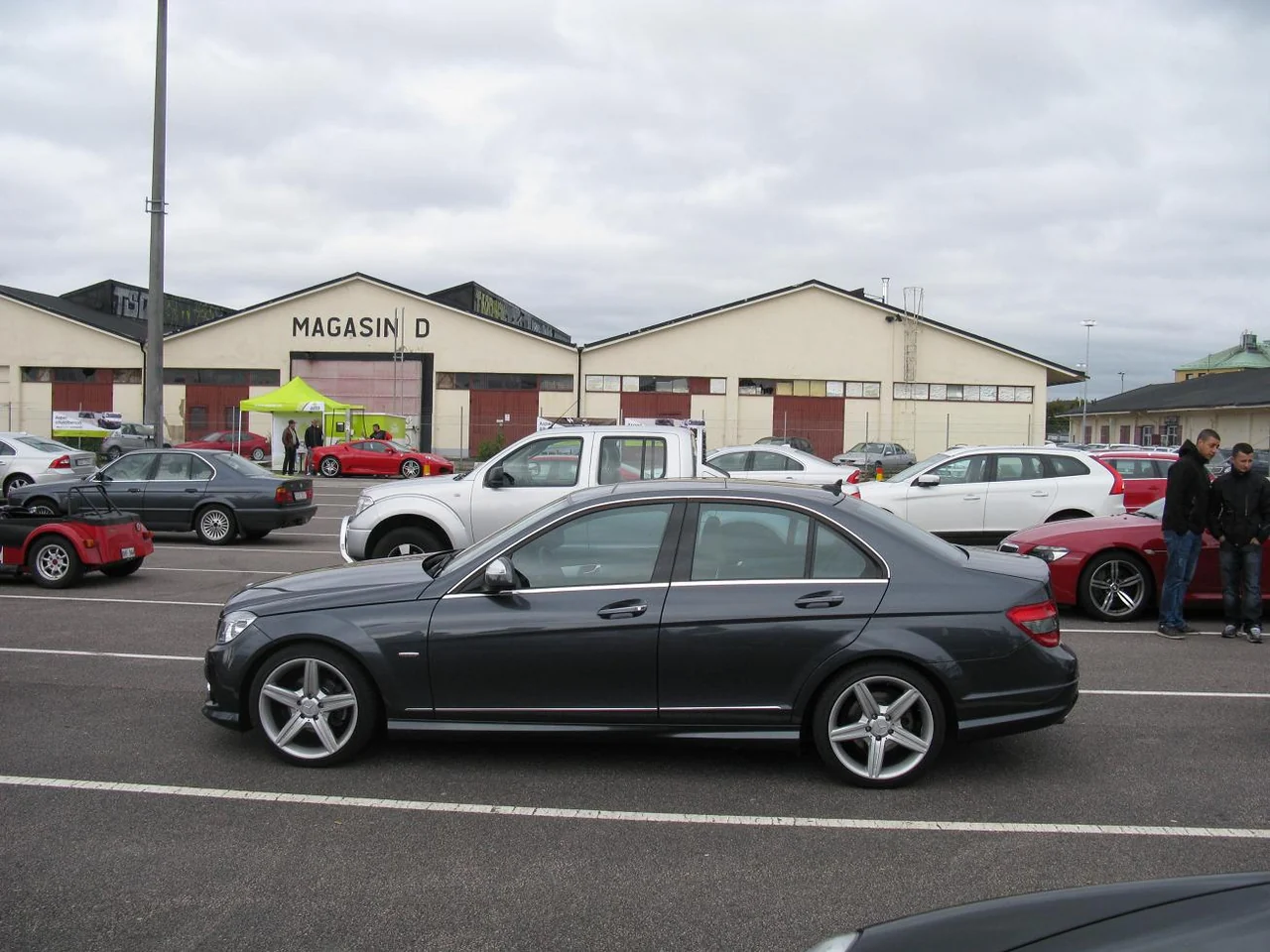
A W204 boot badge is a clue, not an engine decoder. Mercedes-Benz changed engines and naming during the generation, and cars with similar badges can require different parts and procedures.12 Australian availability also differed from overseas catalogues. Identification begins with the vehicle itself.
This guide uses selected manufacturer records to demonstrate the method. It is not a complete Australian engine table.
Identification order
Record the full 17-character VIN, chassis/type number, build date, engine number, transmission and Australian compliance details. Obtain a Mercedes-Benz data card or authorised parts lookup, then reconcile that record with the physical car.
| Step | Record | Why it matters |
|---|---|---|
| 1 | VIN and compliance details | Anchors identity and market history |
| 2 | Body and type | Separates sedan, estate and coupé variants |
| 3 | Engine designation and physical number | Identifies the engine family and exact type |
| 4 | Transmission identification | Prevents fluid, filter and procedure assumptions |
| 5 | Build and model year | Places the car around range changes |
| 6 | Data card and invoices | Tests whether the present car agrees with its record |
Mercedes-Benz says production year and model year can differ in its Australian recall guidance.8 Registration year cannot establish a complete specification.
Worked examples
These global archive examples explain why the process matters. They do not establish every Australian-delivered combination.
| Archived model | Engine designation | Engine type | Lesson |
|---|---|---|---|
| C 180 KOMPRESSOR, 2007–2009 | M 271 E 18 ML LR | 271.952 | Early supercharged petrol example3 |
| C 250 CGI BlueEFFICIENCY, 2009–2011 | M 271 DE 18 LA | 271.860 | Badge number is not literal displacement4 |
| C 220 CDI, 2007–2009 | OM 646 DE 22 LA | 646.811 | Earlier diesel-family example5 |
| C 220 CDI BlueEFFICIENCY, 2009–2011 | OM 651 DE 22 LA | 651.911 | Similar badge, different diesel family6 |
| C 63 AMG estate, 2011–2014 | M 156 E 63 | 156.985 | Exact body and type still matter7 |
The archived C 250 CGI has 1,796 cc displacement.4 The cited C 63 AMG estate record gives type 204.277 and 6,208 cc.7 Neither badge is a simple capacity label. The C 220 CDI records also show an engine-family change from OM646 to OM651 within the W204 era.56
Mercedes-Benz divides sedan history into 2007–2011 and updated 2011–2014 phases.12 Model year, body, production date and market all belong in the decode because the range changed around that update.
Reconcile the physical car
A data card describes production configuration. It does not prove the original engine remains fitted. Replacement engines, long motors, re-badging and undocumented changes are possible.
- Does the engine number agree with registration documents?
- Does authorised data agree with the engine family in the car?
- Are invoices present for a replacement or rebuild?
- Do registration records explain any number change?
- Does ECU identification agree with mechanical and manufacturer records?
- Are intake and emissions components consistent with the identified engine and market?
Do not grind, alter or aggressively clean a stamped identifier. The number’s exact location and format should come from VIN-specific workshop information, not a generic diagram. If a number looks altered or cannot be reconciled, stop and seek professional advice.
Parts and service choices
Engine identity comes before shopping. Oil approval, filters, ignition or diesel parts, cooling components and emissions hardware must suit the exact engine. The gearbox needs the same discipline.
| Purchase | Minimum evidence before ordering |
|---|---|
| Oil or filter | VIN, engine type and manufacturer approval/part lookup |
| Ignition or fuel part | Engine code and physical component confirmation |
| Cooling component | VIN, engine and production split |
| Transmission item | Gearbox code plus factory procedure |
| Emissions component | VIN, engine, market specification and catalogue match |
Treat category listings as leads only. “Fits W204” is not enough. Confirm manufacturer part number and supersession by VIN with a Mercedes specialist or authorised retailer.
Never use a generic oil grade, fill quantity, tightening torque or interval across all W204s. Those values depend on exact engine, gearbox and procedure. Emissions choices may also affect safety, legality and roadworthiness.
Identification checklist
- [ ] VIN copied from car and documents
- [ ] Body and chassis/type recorded
- [ ] Build date and Australian compliance details recorded
- [ ] Physical engine number checked
- [ ] Transmission identified
- [ ] Manufacturer data card obtained
- [ ] Physical car reconciled with manufacturer data
- [ ] Replacement invoices and registration changes checked
- [ ] Parts confirmed by VIN and exact code
- [ ] Recall status checked through Australian official channels
Keep dated copies of the lookup and photographs of the identifiers with the service file. If later work changes an engine or gearbox, retain the supplier and installer records and update registration details where required. The next workshop can then see the evidence behind the decode instead of starting again from the badge.
Sources and further reading
References supporting the reporting and practical context on this page.