
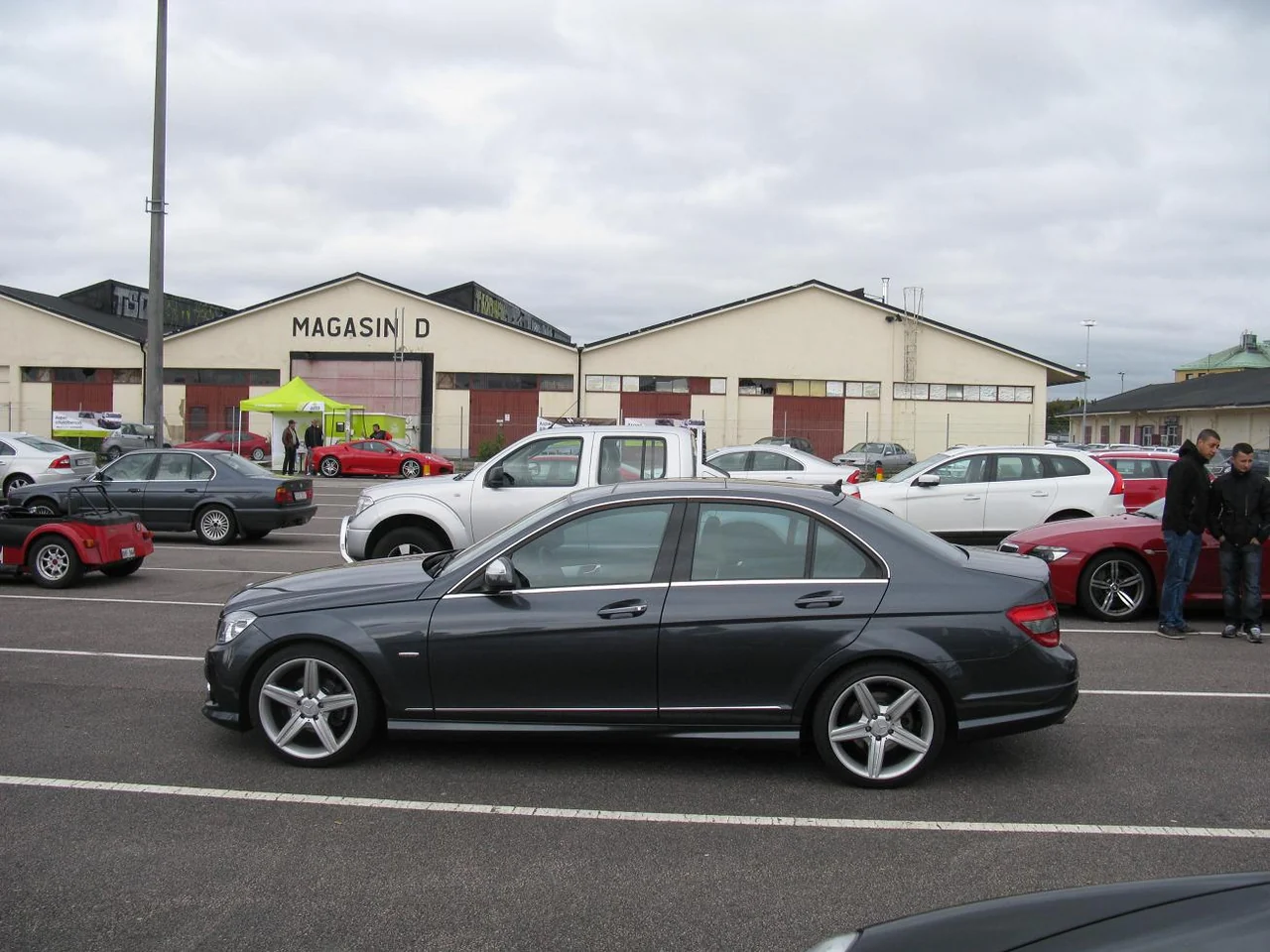
Everyday classic or AMG project?
The W204 family sits at a useful point between an everyday used car and an emerging modern classic. Its conventional saloon proportions and wide engine range make it approachable, but that breadth also makes badge-led shopping unreliable. The C 63 AMG is a separate performance proposition within the family, not the reference maintenance budget for an ordinary C-Class.
Our approach would be to decide how the car will be used before choosing an engine. Short local journeys, regular motorway use, occasional weekends and a desire for an AMG V8 create different priorities. Do not choose a diesel, petrol or performance version solely because one advertisement appears unusually cheap. Compare the fitted systems, previous use and the work identified by the specialist.
The facelift can be a sensible preference for someone who likes its appearance and equipment, but it should not overrule a stronger earlier car. Screens, lights, controls, climate systems and seat functions all need to work on the candidate in front of you. An impressive equipment list is less valuable when several items need unresolved diagnosis.
We would favour a clear ownership file over cosmetic aggression. Large wheels, an AMG-style body kit or altered exhaust do not establish a genuine AMG identity or compatible mechanical changes. A standard car with matching documents leaves fewer questions between the buyer and a useful maintenance plan.
The W204 C-Class is old enough for condition and paperwork to matter more than a neat badge on the boot. Mercedes-Benz used the 204 platform for petrol, diesel, six-cylinder and AMG cars, with engine and naming changes during production.12 Buy the individual car, not a reputation attached to the generation.
Mercedes-Benz identifies the sedan as W 204, the estate as S 204 and the coupé as C 204. The sedan arrived in 2007, the estate followed that year, and the coupé appeared in 2011.3 The manufacturer archive divides sedan production into 2007–2011 and an updated 2011–2014 phase.12 These dates provide orientation but do not prove an Australian car’s specification.
Start with identity
Record the full VIN, build date, Australian compliance details, engine number and transmission. The range included KOMPRESSOR and CGI petrol engines, CDI diesels, six-cylinder cars and AMG variants. A C-Class badge does not reliably decode what is underneath.
Check that the VIN on the car agrees with registration and seller details. Request a manufacturer data card or authorised parts lookup. If the engine has been replaced, its physical number, invoices and registration records should reconcile.
| Evidence | What it can establish | What it cannot establish |
|---|---|---|
| VIN and manufacturer data | Original type and build information | Present mechanical condition |
| Build date and body | Broad W204 chronology | Exact Australian equipment on their own |
| Itemised invoices | Work billed, dates and odometer readings | That every required task was done correctly |
| Dashboard service display | Reminder or reset state | Complete maintenance history |
| Boot badge | Claimed model identity | Engine currently fitted |
Pre-update or updated car?
The 2011 division matters because Mercedes-Benz records materially different phases around the update. Styling cues are prompts to investigate, not final proof. Cars can have replacement panels, later wheels or altered trim, while production and model years can differ.
Give more weight to coherent identity, credible records and a clean specialist report than to assumptions that either production phase is automatically better.
| Assessment factor | Stronger evidence | Reason to pause |
|---|---|---|
| Identity | VIN, type, engine and documents agree | Unexplained mismatch or vague import history |
| Maintenance | Itemised invoices with dates and odometers | Stamps alone or repeated “full service” entries |
| Mechanical state | Clean cold start and specialist report | Warnings, smoke, noise or shift concerns |
| Body and underside | Consistent finish and inspected structure | Corrosion or unexplained repair |
| Recall status | VIN lookup shows campaigns resolved | Seller relies on model year alone |
Inspection checklist
See the engine cold if possible, then continue until fully warm after basic safety checks.
- Confirm every physical and documentary identifier.
- Watch warning lamps during the bulb check and after start-up.
- Note abnormal noise, smoke, unstable idle, leaks and temperature behaviour.
- Check that the transmission selects and shifts without evident faults.
- Test climate, electrical and comfort equipment rather than assuming it works.
- Have a Mercedes specialist inspect body structure, subframes, suspension, steering, brakes, cooling and driveline.
- Request a full diagnostic scan, but never treat it as a substitute for mechanical inspection.
- Review itemised invoices for scheduled work and significant repairs.
Do not crawl under a car supported only by a jack. Brake, steering, restraint, fuel, high-current electrical and structural findings require a qualified professional.
Australian recalls and purchase checks
Australian Government recall REC-003684 applies to specified W204 vehicles.4 Mercedes-Benz Australia also includes 204 sedan, station wagon and coupé ranges in its Takata tool.5 Neither source means every W204 is affected. Check the individual VIN and follow any stop-drive or repair direction. Airbag work belongs with an authorised repairer.
Run a PPSR search on the day of, or the day before, purchase. It can return registered security interests plus NEVDIS stolen and written-off information.67 Match the VIN and keep the certificate.
Australian-delivered cars and private imports may differ from overseas records. Do not infer equipment or campaign coverage from a foreign brochure. Verify the exact car through its VIN and local compliance history.
Service and parts boundaries
Ask which official schedule applies to the engine and gearbox. A service reset is not documentary proof. No universal interval, oil specification, fill quantity or fault rate applies across this range.
Keep parts research at category level until an authorised catalogue or marque specialist has confirmed exact fitment by VIN and manufacturer part number.
Keep a copy of the inspection report, PPSR certificate, VIN recall result and the seller’s invoices together. If a promised document is unavailable, record that gap rather than treating a verbal assurance as evidence. It is also sensible to ask the inspecting workshop to separate urgent safety work, near-term maintenance and optional cosmetic jobs. That makes the purchase assessment clearer and easier to document without pretending the inspection can predict every future repair.
There is no responsible universal price band here. Live value depends on variant, history, condition and current Australian demand. Compare the documents and inspection findings side by side; unresolved gaps belong in the buying assessment, not in a footnote after it.
Sources and further reading
References supporting the reporting and practical context on this page.
- Mercedes-Benz Public Archive: 204 series, 2007–2011 ↗ ↩
- Mercedes-Benz Public Archive: 204 series, 2011–2014 ↗ ↩
- Mercedes-Benz Media: C-Class history ↗ ↩
- Australian Government Vehicle Recalls: REC-003684 ↗ ↩
- Mercedes-Benz Australia recall lookup ↗ ↩
- PPSR: understand your search result ↗ ↩
- PPSR: quick motor vehicle search ↗ ↩