
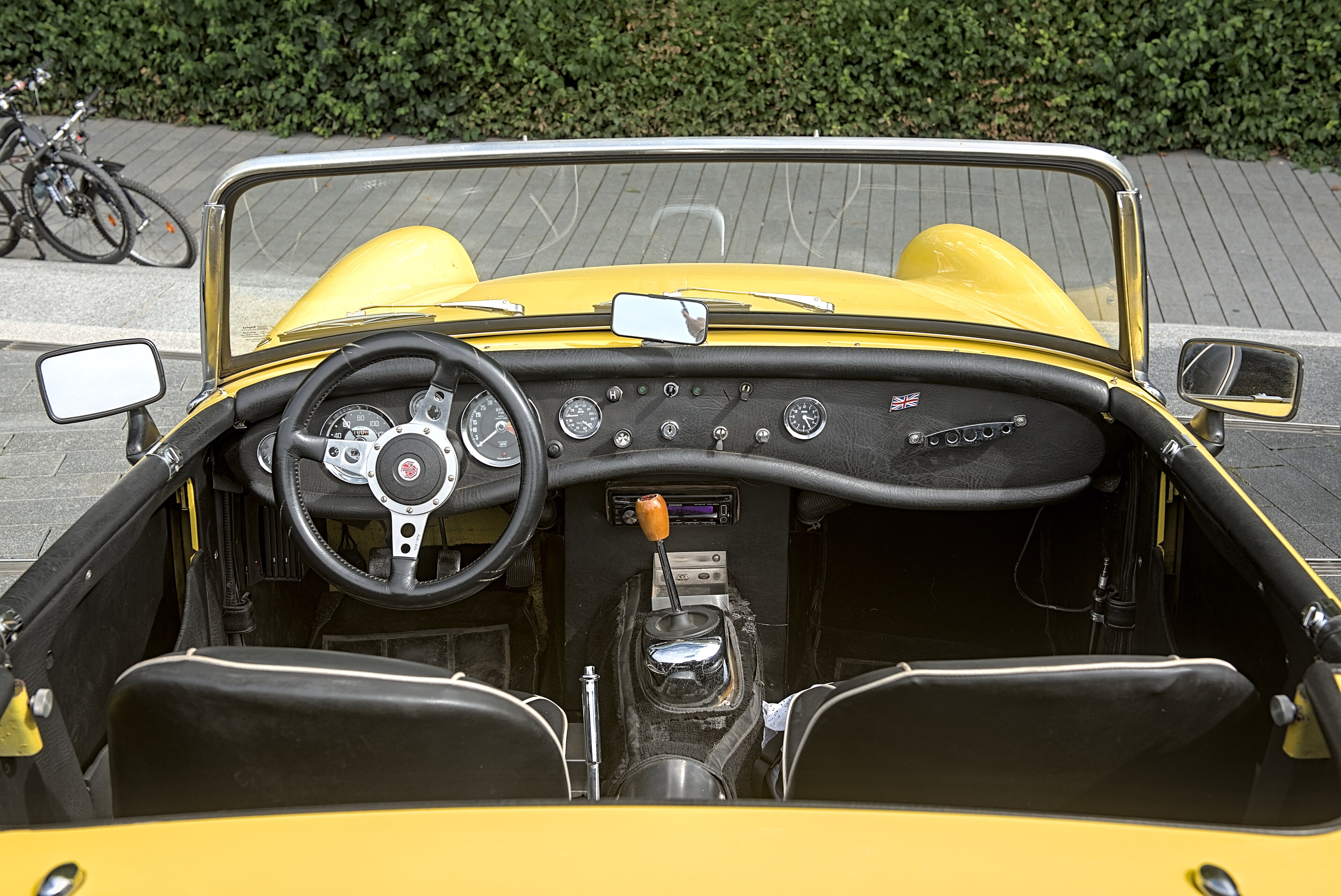
The modern MG Midget began as a close relative of the Austin-Healey Sprite, and owners still use "Spridget" as shorthand for the pair.1 The shared structure is good news for knowledge and parts supply. It also means a buyer can become distracted by easy mechanical upgrades while missing corrosion in the shell that carries the suspension loads.
MG introduced the Midget in June 1961 as a more highly trimmed counterpart to the Sprite Mk II, initially using a 948 cc A-series engine.1 From there the car changed in useful steps rather than one clean reinvention. Knowing those steps helps a buyer identify a car, but a chassis number and documents still matter more than a seller's model-year label.
The main phases
Engine capacity rose to 1,098 cc in 1962, and front disc brakes followed in 1963.1 The Mk II arrived in 1964 with wind-up windows and half-elliptic rear springs. For 1966, the Mk III adopted the 1,275 cc A-series engine.1 These changes make the later A-series cars attractive to drivers who want traditional looks with a more developed specification.
Late in 1974, the Midget 1500 brought a larger change. Its 1,498 cc engine came from Triumph, while the all-synchromesh gearbox was derived from the Marina. Raised ride height and energy-absorbing bumpers altered both appearance and dynamics.1 Production ended in December 1979.1 Some registrations and market references extend into 1980, but that should not be mistaken for factory production continuing through the year.
A stray statement on the MG club's long history page gives 1982 as an end point, conflicting with its detailed chronology and the recorded December 1979 cessation.1 The specific chronology is the stronger account. This is a useful reminder that even a generally sound source can contain an internal inconsistency.
Identify the car before rating it
Record the chassis number, body tags and engine number exactly. Compare them with a model-specific register, then check whether the physical features fit the claimed phase. Later engines, gearboxes, front ends and trim are common. They may improve usability, but the registration description, insurance and sale advertisement should reflect the real car.
Look for a continuous history in receipts, old registration papers and photographs. A fresh restoration with no images of bare structure deserves more investigation, not less. Ask which panels were replaced, who welded them and how alignment was checked. Cosmetic finish cannot establish what remains underneath.
Australian buyers also need to establish import and registration status. A car first delivered elsewhere may have perfectly legitimate history, but compliance and identification should be clear. Any substantial engine, brake or structural change needs to satisfy the requirements of the relevant state or territory.
Rust decides whether the project makes sense
Specialist buying guidance identifies corrosion as the largest financial risk.2 The crucial areas include outer and inner sills, floors, rear wheel arches, rear bulkhead and rear spring attachment points.2 These are structural parts of the shell, not decorative edges that can always be patched cheaply.
Inspect on a hoist with a Spridget specialist. The car must be supported safely, and the inspection should follow load paths rather than simply listing visible bubbles. Look for distorted seams, layered patches, recent underseal and welding that stops short of sound metal. Check door gaps with the car on the ground; movement or poor fit can suggest weakness, although hinges and prior accident repair can produce similar symptoms.
Even paint and tidy panel gaps can conceal corrosion.2 Probe only with the owner's permission, and do not treat a magnet as a complete test. Access behind trim and carpets, photographs during prior work and inspection from below provide a better picture.
Mechanical inspection in context
Once the shell appears viable, run the engine from cold. On a 1500, specialist guidance says bottom-end noise deserves particular attention.2 On any version, watch oil pressure and temperature, check for coolant loss and inspect for leaks after the drive. A compression test and oil-pressure test can clarify concerns that sound alone cannot.
Test clutch slip and every gear. Synchromesh condition, jumping out of gear and driveline vibration need diagnosis. The 1500's all-synchromesh transmission is not the same unit as the earlier gearbox, so parts estimates should be based on the actual car.
Steering play, brake pull and overheating all belong on the road-test sheet.12 Do not accept a vague claim that these behaviours are "normal for an old car". Some steering feel and braking effort reflect period design; pulling, looseness and unstable temperature indicate faults until a qualified inspection says otherwise.
The 1,275 cc A-series has particularly strong parts support.1 That is helpful, but parts availability should not excuse an undocumented engine build. Receipts and specifications matter if a modified engine contributes to the price.
Buy the structure and the record
An MG Midget can be simple, direct and repairable without being cheap to reconstruct. The expensive mistake is buying a shiny body and discovering that sills, floors and spring mounts all need to be rebuilt in relation to one another.
Choose the phase that suits the intended use, then buy the best documented shell available. Mechanical wear can be estimated. Structural uncertainty is harder to contain, which is why a specialist hoist inspection should come before negotiation, not after the car is home.
The report should distinguish urgent safety work, corrosion that needs monitoring and cosmetic defects. That separation helps a buyer budget without turning every mark into a crisis. It also gives a restorer a baseline against which later work can be documented. Keep photographs of opened sills and floors before new metal is covered. For a Midget, evidence of competent structural work is far more useful to the next owner than an unsupported claim that the body was "fully restored".
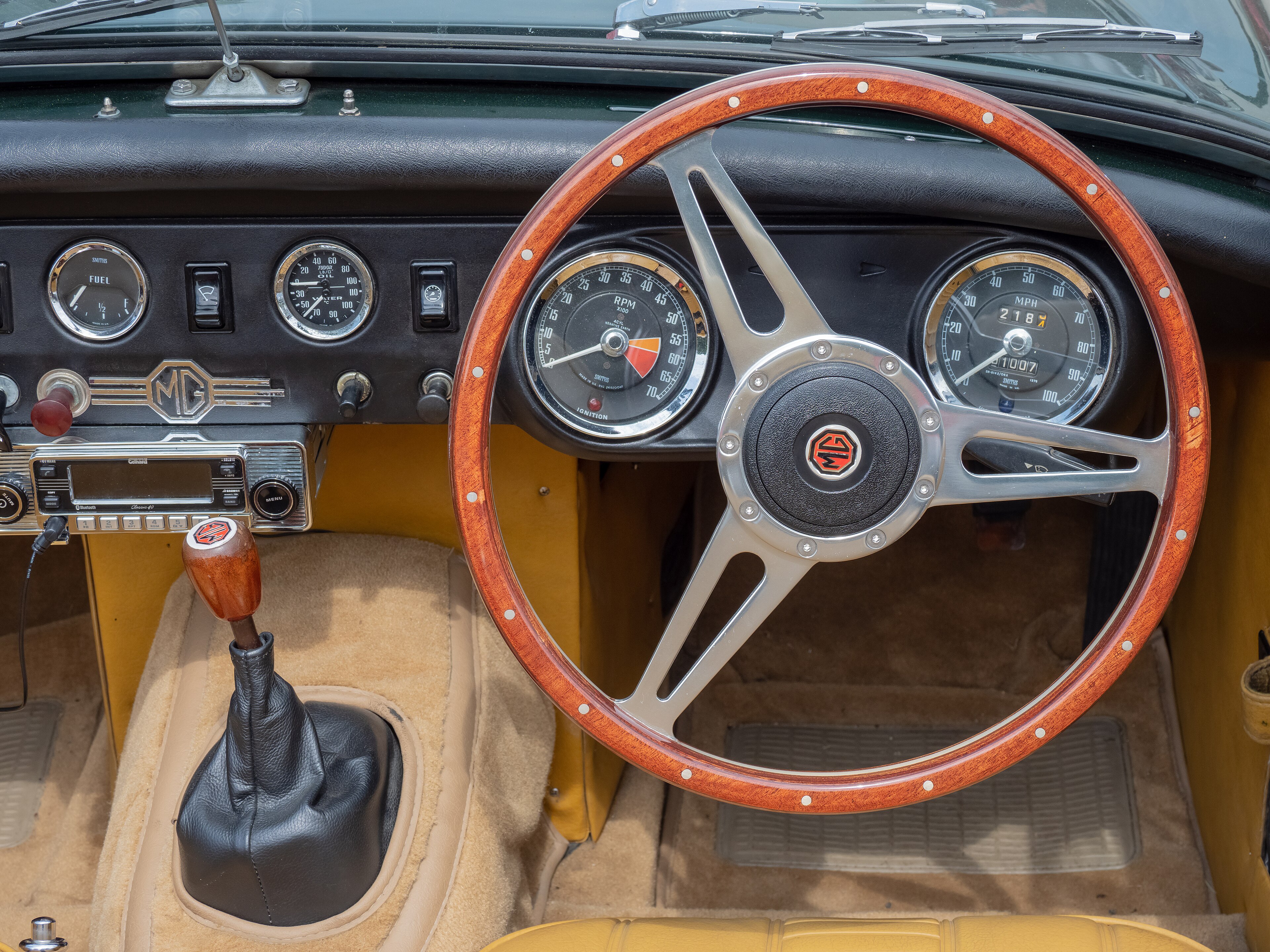
Sources and further reading
References supporting the reporting and practical context on this page.


.jpg)
